Lighting Guide

Can you still buy incandescent light bulbs in 2025?

Can You Still Buy Incandescent Light Bulbs?

If you’re wondering, “Can you still buy incandescent light bulbs?” or “Where to buy incandescent light bulbs?” you’re not alone. With the U.S. Department of Energy’s efficiency standards fully in effect as of August 2023, many assume these classic bulbs are gone for good. But here’s the good news: not all incandescent light bulbs were affected by the ban, and you can still find options if you know where to look. Great news, considering incandescent light bulbs might just be one of the healthiest lighting choices out there!  History The ban, rooted in the Energy Independence and Security Act of 2007 and updated under the Biden administration, targets “general service lamps” that don’t meet a minimum of 45 lumens per watt. Traditional incandescent bulbs, which typically produce only 15 lumens per watt, largely fell short of this standard, making their manufacture and sale illegal in most cases. However, the law includes several exemptions that keep certain types of incandescent bulbs available. Where to buy incandescent light bulbs? So, where can you buy incandescent light bulbs in 2025? While most major lighting manufacturers have shifted production mainly toward LEDs, you may still be able to search for some of the exempted categories of incandescent light bulbs. Or you can find them here! Shop beautiful Chromalux® incandescent light bulbs - a very enhanced and more beautiful version of incandescent light bulbs!  Other keywords you could try:  -Silver Bowl incandescents -Rough Service incandescents  -130V incandescents  -Appliance bulbs -Low Lumen incandescent bulbs  See if those find you any results!  Will incandescent light bulbs come back?  Even if the new administration reverses the ban, we find it unlikely that standard usage incandescent light bulbs will be readily available on shelves again. The unfortunate reality (for now, at least!) is that most, if not all, major lighting manufacturers have switched to LED. However, specialty brands like Chromalux® and any others will continue to stick around.  Why do we still carry incandescent bulbs? Chromalux® bulbs were first developed in Finland in 1959 and introduced to the U.S. in 1978, when our founders brought these unique neodymium glass incandescent bulbs to market. The neodymium glass in Chromalux® bulbs refines the visible light spectrum, enhancing color, clarity, and contrast. At the time, incandescent was the only available lighting technology, so naturally, Chromalux® began with incandescent filaments. Over the years, as LED lighting became more widespread, we expanded our line to include neodymium glass LED options. However, even today, nothing pairs with our glass technology quite like the warm, natural glow of incandescent light. That’s why we continue to produce and offer Chromalux® incandescent bulbs—because, for the purest light quality, they’re still unmatched. Why is incandescent the healthiest lighting choice? So why do we still think you need incandescent light bulbs? Because they remain the healthiest, most natural form of “artificial light” available.  While incandescent bulbs may not perfectly match the color temperature of midday sun (they’re typically around 2700K, whereas noon sunlight is closer to 5000K–6500K), they come remarkably close in terms of how our bodies respond to light. That’s because incandescent (and halogen bulbs, their brighter cousin) emit a full, balanced spectrum of visible and infrared light—something no other technology can naturally replicate. We even refer to them as “analog” light sources thanks to their smooth, continuous light output—free from the sharp peaks and unnatural spikes seen in many LED bulbs.  Unlike LEDs, which can emit high levels of disruptive blue light and lack nourishing infrared, incandescent bulbs offer a gentle, soothing glow. They don’t strain the eyes, they don’t interfere with sleep, and they support well-being in a way that mimics natural light. In fact, infrared light—often dismissed as "wasteful light” or thermal waste by critics—comprises up to 44% of natural sunlight and plays a key role in cellular health and regeneration.  Yes, incandescents use more energy—but we see that as a worthwhile trade-off for the quality of light they deliver. That said, mindful usage is key: turn them off when not in use, and consider pairing them with full spectrum LED overhead lighting for ambient fill, while reserving incandescents for lamps and fixtures close to where you spend the most time. That’s where their benefits really shine brightest, after all (pun intended!). Think of incandescent light bulbs like daily doses of light-based vitamins. Especially with mood-enhancing bulbs like Chromalux® full spectrum incandescent, the light becomes more than illumination—it becomes nourishment for body, mind, and soul. Thanks for reading! 

a rainbow of full spectrum light over mountain range

A Complete Guide To The Full Spectrum of Light

It may come as no surprise that light affects most living beings. But what exactly is light? In this article, we'll deep dive into all things concerning the light spectrum, exploring the full spectrum of light as we know it in greater detail.  We'll cover the three essential spectrums of light for health: going into detail on ultraviolet, visible, and infrared light.  Some light we see (the visible light spectrum and its constituent colors), and some light we feel (infrared & UV), but no matter the type, all light affects us, our physiology, mood, and overall well-being!  Let's explore!   Understanding the full spectrum of sunlight: The three vital spectrums of light       Even though "light" can technically refer to the larger electromagnetic spectrum (containing everything from gamma rays to radio waves), there are only three spectrums of light that are the focus of everything and anything discussing light or full spectrum light and health.  They are, in order of appearance on the spectrum:  -Ultraviolet Light (UV)  -Visible Light (white light and all the colors of the rainbow) -Infrared Light These three bands of invisible and visible light profoundly affect all plant, animal, and human life.  They affect our circadian sleep/wake schedule and all downstream effects, such as digestion, hormones, body temperature (through visible light), the production of Vitamin D ( through UV light), and cellular energy production (through infrared light).   Let's first learn more about the most universally recognized spectrum of light: the visible light spectrum.  Visible light (380nm-780nm) Environmental cue for the circadian rhythm    Visible light is the spectrum that allows us to see and contains the rainbow of colors - Red, Orange, Yellow, Green, Blue, and Violet - all of which comprise white light. When most people refer to "light," they refer to this small spectrum of colors.  The presence or absence of visible light is the critical component that dictates human and animal circadian rhythms.  Two critical light colors to understand are blue and red light wavelengths:  Even though visible light is made of all the colors of the rainbow (ROYGBIV), it's these two portions of the visible light, blue and red, that have most of a hold on our day-to-day lives.    Blue light (380nm - 510nm)   What is blue light?  Perhaps the best-known (or most spoken about!) of all the visible light wavelengths is blue light. Blue light is the shortest wavelength of visible light, which sits right above ultraviolet light. It is the first color wavelength of visible light right above ultraviolet.  Blue light is present in high amounts in natural sunlight during the day, and plays a critical role in human and plant life. The presence or absence of blue light controls our circadian rhyhtm and all the subsequent biological processes controlled by our 24 hr clock. We need high-quality blue light in order to regulate the body's circadian rhythm and improve alertness and mood. However, exposure to blue light, especially at night, can disrupt sleep and cause other health problems.  How does blue light work?  Blue light affects the production of the hormone melatonin, which is best known as the hormone regulating sleep. When the eyes are exposed to blue light, it sends a signal to the brain's suprachiasmatic nucleus (SCN), which regulates the body's internal clock. This signal suppresses the production of melatonin, which can help to increase alertness and reset the body's circadian rhythm to be more awake and active during the day. Conversely, when blue light exposure decreases, such as in the evening or at night, the production of melatonin increases, which signals to the body that it's time to sleep.  This is why it's important to limit exposure to blue light at night, particularly from electronic devices like smartphones and computers, as this can disrupt the production of melatonin and interfere with the body's natural sleep-wake cycles. Is blue light bad for you?  Many people have heard about blue light in a negative light: as we've just learned, blue light can interfere with the body's production of melatonin,  and can therefore lead to difficulty falling asleep as well as poor quality of sleep when used at night. That means using devices and screens should be avoided at night for a better night's sleep.  Blue light is a fundamental and biologically necessary portion of the light spectrum, the specific type of light that innervates our circadian rhythm and the resulting cascade of biological processes that keeps our bodies running in good health.  So, while "artificial" blue light from screens and other electronics isn't the greatest idea (especially at night), blue light is present naturally in sunlight during the morning and daytime hours. It's a necessary ingredient in the recipe for good health. In other words: blue light is necessary, just not at night: it's stimulating and prevents our bodies from winding down for a night of deep and restorative rest.  The different types of blue light It's important to understand that not apart from timing of blue light exposure, there exists also essentially two types of blue light: high-energy violet (HEV) or blue-violet light, and the biologically innervating, "healthy" blue-turquoise light.  Blue-violet light The blue–violet (380 to 450 nm) portion of the spectrum is also known as high-energy violet (HEV) or high-energy blue light. Most of what you hear about the dangers of LED lighting involve this specific part of the blue light spectrum: Blue-violet light reaches the retina of the eye and has been shown to cause cumulative and lasting damage to retinal structures. Blue-turquoise light The blue–turquoise (450 to 500 nm) portion of the spectrum is the "healthier" type of blue light. Blue-turquoise light—specifically 480nm—is the strongest influencer of our circadian rhythm and the production or inhibition of melatonin, a hormone most well-known for its role in inducing sleepiness.  We've written extensively before on how blue light affects our circadian rhythm. You'll note that the most important factor in this process is the presence of highly specialized, non-image-forming photoreceptors in our retinas, called intrinsically photosensitive retinal ganglion cells. These cells contain a photopigment called melanopsin, whose peak absorption is 480nm blue light. Nothing, including blue light, works well in isolation To conclude our discussion about blue light, we must stress that HEV, blue-violet light is of course present in natural sunlight - and on its own is not the problem. Like anything, wavelengths of light work best in harmony: in the full balanced spectrum of light. This HEV light in isolation as a peak at a certain wavelength (the main problems with device screens set to a cool white color temperature) is the problem.   Red light (650nm-780nm) Now that we know everything about blue light, let's move on to the other important portion of the visible light spectrum: red light.  What is red light?  Red light has a longer wavelength and lower energy than blue light and marks the end of the visible spectrum right before infrared light.  Whereas blue light can be considered energetic, red light has a more soothing, nourishing effect. Red light has no effect on the production of melatonin and therefore is a great option to use at night before bed. What is red light used for?  Red light is also a popular light therapy tool often used in conjunction with infrared light (which we'll learn about soon) and has been found to have some therapeutic benefits for skin conditions.   The visible light spectrum and color temperature So now that we know about visible light and its two most important constituents: blue light and red light - what do these have to tell us in terms of light bulbs and light bulb color temperature?  Color temperature - for those that need a quick refresher - is a visual representation on a scale of how warm or cool a light source appears. In other words, a measure of the whiteness of a light source. Light sources whose spectrum skews more towards the red is referred to as warm white, whereas light skewing more towards blue is referred to as cool white or daylight white.  Which color temperature to use at night or during the day?  According to what we've learned about blue light, you'd want to use light sources with more blue light in its spectrum (i.e., a natural or cool white/daylight white (4200-6500K)) during the morning and daytime, saving those warmer, redder light sources for the evening (warm white 2500-3500K)  Ultraviolet light (200nm-400nm)  Now that we’ve learned about the visible light spectrum, we’ll move on to one of the most commonly known invisible light spectrums, ultraviolet (UV) light.  UV light sits directly to the left, or below, blue/violet visible light (hence the name, ultra-violet), and is too short a wavelength to be visible to the human eye. UV light can be broken down into three segments, UVA, UVB, and UVC light, but only UVA and UVB light are important to our health, as natural UVC light doesn’t reach Earth’s surface.  Benefits of UV light UV light is a critical part of the light spectrum for overall health and well-being, providing many of the beneficial parts of light not available in other types. Like anything, overexposure can harm the skin and eyes, but a balanced consumption of UV is absolutely critical for total health.  Whereas the visible light spectrum and blue color light control our sleep/wake 24-hour cycles, it is ultraviolet light (and its constituent UVA and UVB spectra) that control the very important synthesis of vitamin D.  UVA light (315-400nm) and UVB light (280-315nm) We combine UVA and UVB since they serve many of the same functions. UVA light is closest to visible light and actually overlaps a bit into the visible spectrum, while UVB light has a shorter wavelength and higher energy than UVA light. You’re probably familiar with the effects of UVA and UVB overexposure, such as sun spots, wrinkles, and skin cancer, yet UVB in particular, is a crucial light element that you won’t otherwise find in your indoor lighting (unless you have a tanning bed!), and let’s our body produce Vitamin D and serotonin.  Vitamin D synthesis: When the skin is exposed to UVB light, it produces vitamin D, a vitamin crucial for immune function, bone health, and other physiological processes.  Improved mood: Exposure to UV light can increase the production of serotonin, a neurotransmitter that helps to regulate mood and can help to alleviate symptoms of depression and other mood disorders. Again, it’s important to get outside under natural sunlight every morning to get UV light (the amount varies depending on the season and how fair or dark-skinned you are), as it’s nearly impossible to get the necessary amount of UV light from light bulbs. A full spectrum light bulb will not provide UV in any quantity nearly sufficient for human usage.  UVC light (200-280nm) Last up on the ultraviolet spectrum is UVC light, the last band of UV light farthest from visible light, and unable to penetrate Earth’s atmosphere.  It is referred to as germicidal UV light because it is effective at killing bacteria and viruses; most sterilizing UV lights use the UVC spectrum.  Infrared light (780nm-1nm) Next is infrared light, another band of light energy invisible to the human eye, which sits directly next to the visible red color wavelengths.  Felt at thermal energy or heat (like that emitted from a fire or incandescent light bulb), infrared light is incredibly nourishing, with red and near-infrared light (the infrared band closest to visible red light) being the only wavelengths of light able to penetrate the skin, promoting cell regeneration, tissue oxygenation, and overall health and energy in the cells.  Infrared light is also used in various medical treatments, including pain relief, wound healing, and muscle recovery, as well as non-health applications such as night vision goggles and thermal imaging cameras.   Infrared A (Near-Infrared Light) 780nm-1400nm Infrared A (IR-A) or near-infrared light (NIR) refers to a range of electromagnetic radiation with wavelengths between 780 nanometers (nm) and 1400 nm.  IR-A or NIR radiation is the wavelength most commonly used for Photobiomodulation to stimulate cellular activity and promote healing in the body. Some of the benefits of NIR light include: Benefits of Near-Infrared Light Include: Pain relief: NIR light has been shown to reduce pain and inflammation by promoting the release of endorphins and increasing blood flow to affected areas. Reduced inflammation: NIR light has anti-inflammatory effects, which can be beneficial for a wide range of conditions, including arthritis, tendonitis, and other inflammatory conditions. Improved circulation: NIR light therapy has been shown to improve circulation by increasing the formation of new blood vessels and promoting blood flow to damaged or injured areas Improved skin health: NIR light can improve the appearance of skin by stimulating collagen production, reducing fine lines and wrinkles, and promoting wound healing. Enhanced athletic performance: NIR light therapy has been shown to improve muscle recovery and reduce muscle fatigue, leading to enhanced athletic performance. Infrared B (Mid-Infrared Light) 1400nm-3000nm While NIR light is more commonly used in photobiomodulation therapy (it has better tissue penetration) mid-infrared light (MIR) light is more effective in treating deeper tissues, such as muscle and bone, due to its longer wavelengths. Infrared C (Far-Infrared Light) 3000nm-1mm While not as commonly used as near-infrared light (NIR) in photobiomodulation (PBM) therapy   Wrapping up... We're big believers in being armed with lighting knowledge: the more you know, the less in the dark you'll be about using light to your advantage! Remember that the three spectrums of light we covered: ultraviolet, visible light (blue and red light), and infrared light are all essential spectrums of light necessary for our health and ultimate well-being. Also remember, that no single light bulb can combine all three spectrums into one bulb: this is why it's crucial to get enough sunlight every day.     Further Reading Now that we know about the spectrums of light that affect health, let's learn about how these spectrums affect our health and well-being! Read A Complete Guide to Light and Health. 

Incandescent vs. Halogen Light Bulbs

Incandescent vs. Halogen Light Bulbs

Here's a question we often get: what is the difference between incandescent and halogen light bulbs? Read on to answer that question and some of your most frequently asked questions regarding this light technology! What is the difference between an incandescent light bulb and a halogen light bulb? If you need a refresher, the incandescent light bulb (sometimes referred to as Edison bulbs) uses electricity to heat a filament until it is hot enough to glow and produce visible light.  Incandescent (and halogen!) are considered to be the healthiest, most natural form of lighting available. Take this filament and encapsulate it with a halogen gas to make the light more efficient and whiter in color temperature, and now you have a halogen light source!  So, while a halogen light bulb is still technically an incandescent light bulb, the main difference is the capsule within the bulb and the resulting whiter color temperature and light spectrum. This capsule allows the filament to work more efficiently and burn brighter, translating to a whiter color temperature. In other words, halogens are simply an enhanced version of incandescent! Any difference in benefits?  Both incandescent and halogen light bulbs feature a pure and high-quality light spectrum and are what we lovingly call "analog" light sources. In addition, both are equivalent in health and well-being, just slightly differing in light appearance and usage, as we'll see below. What are the uses of halogen light bulbs? The whiter color temperature of halogens means the light spectrum shifts towards blue, making them perfect for daytime usage. So precisely speaking, we recommend using incandescents in the evening and halogens during the daytime, though you could get away using either whenever you'd like! Just be sure to dim those lights as the evening progresses! (Thankfully, both incandescent and halogen are universally dimmable for the most part!) What is the appearance of halogen?  In terms of our own Chromalux® bulbs, our Enhanced™ full spectrum halogen light bulbs have a more vivid and pure appearance, while our full spectrum incandescent light bulbs have a more soothing, colorfully vivid appearance.   💡Thanks for reading! If you're interested in more articles like this (and for even more content on light and wellness), subscribe to our newsletter! You'll also get a code for 10% off your first order with us - so you can try out all the above recommendations! Scroll down a bit to find the subscribe box...

How to Light a Home Office

How to Light a Home Office

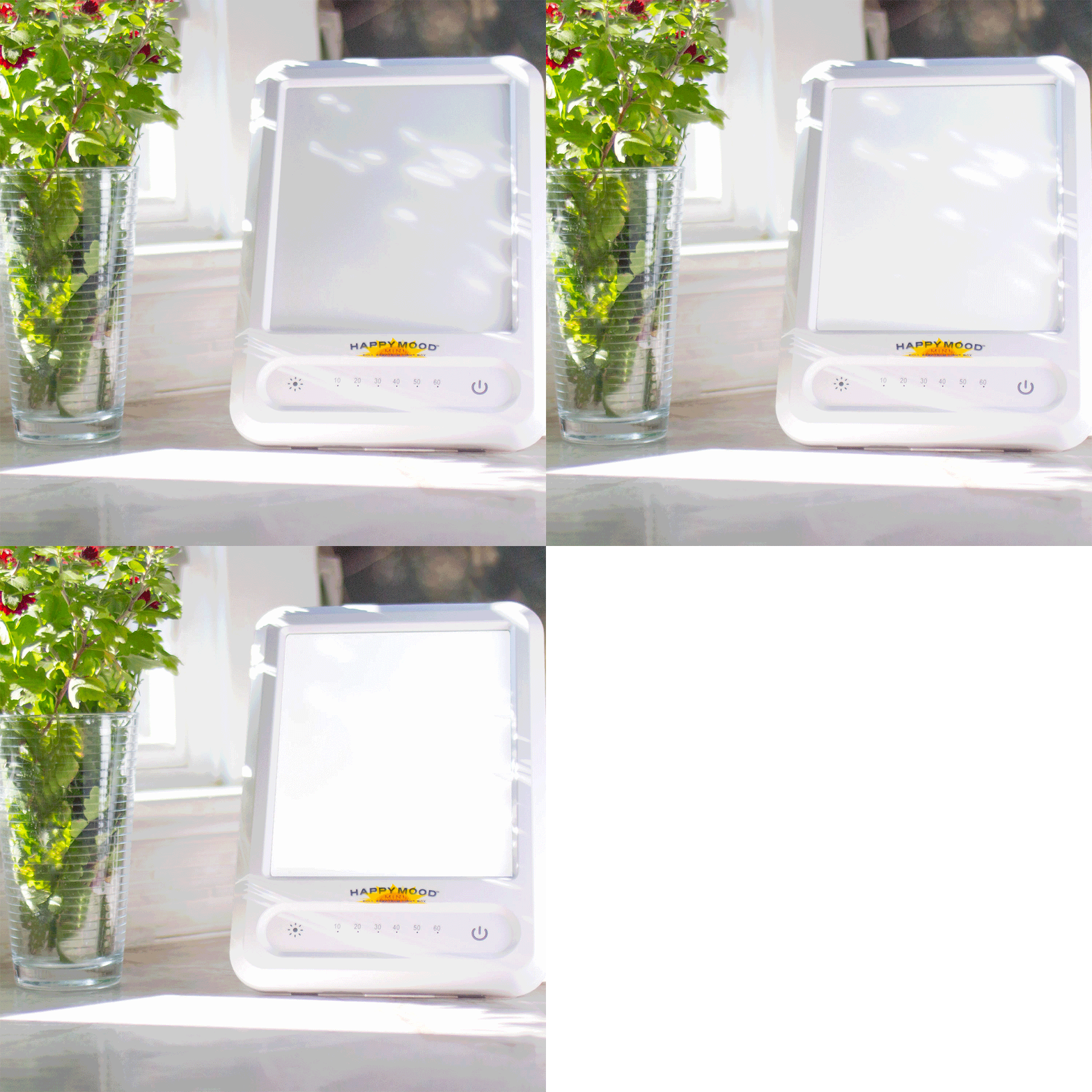
Apart from setting up your desk (hopefully!) by a window, the next best thing about working from home is the ability to be selective about your work environment - lighting included!  We like to think that lighting is as essential as eating well and getting good rest when it comes to working your best the next day. And as you may know, lighting controls so much of our day-to-day functioning and mood.  Today let's get into picking out the best lighting for your home office!  To boost feelings of productivity and creativity from your light, you have to understand the intimate interplay between the color of light, the types of lighting, etc., and how it interacts with your mood, sleep, and pretty much your whole existence. Short of going ahead and reading up on everything light and health, (though, please do- lighting is as elemental as air for us!), you can use this quick list to get you started on the right foot in illuminating your home office!   Let's dive in.  Step 1: Use bright white overhead lighting First, make sure you have adequate overhead lighting.  Adequate meaning, it should be bright enough and "blue" enough in color temperature to stimulate an awakening, energizing effect.  The color temperature of light plays a role in our mood and daily functioning. Ensure your overhead lighting - likely recessed can light fixtures - uses flood bulbs in a color temperature range between around 4000K and 6000K. Remember, the higher the color temperature number, the "bluer" the light.  These bluer, whiter, and cooler light temperatures tell our brain and body that it's time to wake up and get productive.  For the same reason you've likely heard of limiting screen time and blue light exposure in the evening - it keeps you awake! - is the same reason you need access to plenty of it during the morning and daytime!  Our overhead lighting is like the backdrop in a painting - it sets the scene's tone. So if you fill your room well with a backfill of stimulating light, we can move on to step #2: using colorful, glare-free task lights to illuminate your workspace at close range!    Step 2: Illuminate your workspace with desk lamps Once your overall space is set with bright white overheads, you'll want to illuminate your immediate desk or work area with some colorful task lighting.  Using this Chromalux® light bulb in any old desk or floor lamp is one of my favorite ways to illuminate my desk space daily at close range. Not only does it reduce eye strain, but it also envelops the room in colorful light that boosts creativity. I feel the difference working with it versus without!     Step 3: Use a bright light therapy pad or light box for an added jolt of energy in the morning While not quite a lighting tip in the traditional sense, this one needs to be included - especially during the darker months of the year.  Traditionally used during the darker fall and winter months to combat feelings of depression and lethargy from a lack of sunlight (known as SAD, or Seasonal Affective Disorder), you can also use light pads throughout the year first thing in the morning for an added boost of energy! However, the effects are pretty instant, and you'll want to turn off your device anywhere after 10-30 minutes, depending on the intensity of the light.  Some takeaways The biggest mistake we always see is attempting to get work done without light. Don't expect gains in productivity and/or creativity without investing a bit in your light!  If you found this article helpful, consider subscribing to our monthly newsletter where we discuss all things lighting and wellness. Beautiful lighting has the ability to do more than just illuminate a space, it can transform how you show up everyday. Let us show you how. 

Lighting Tips for Productivity

Lighting Tips for Productivity

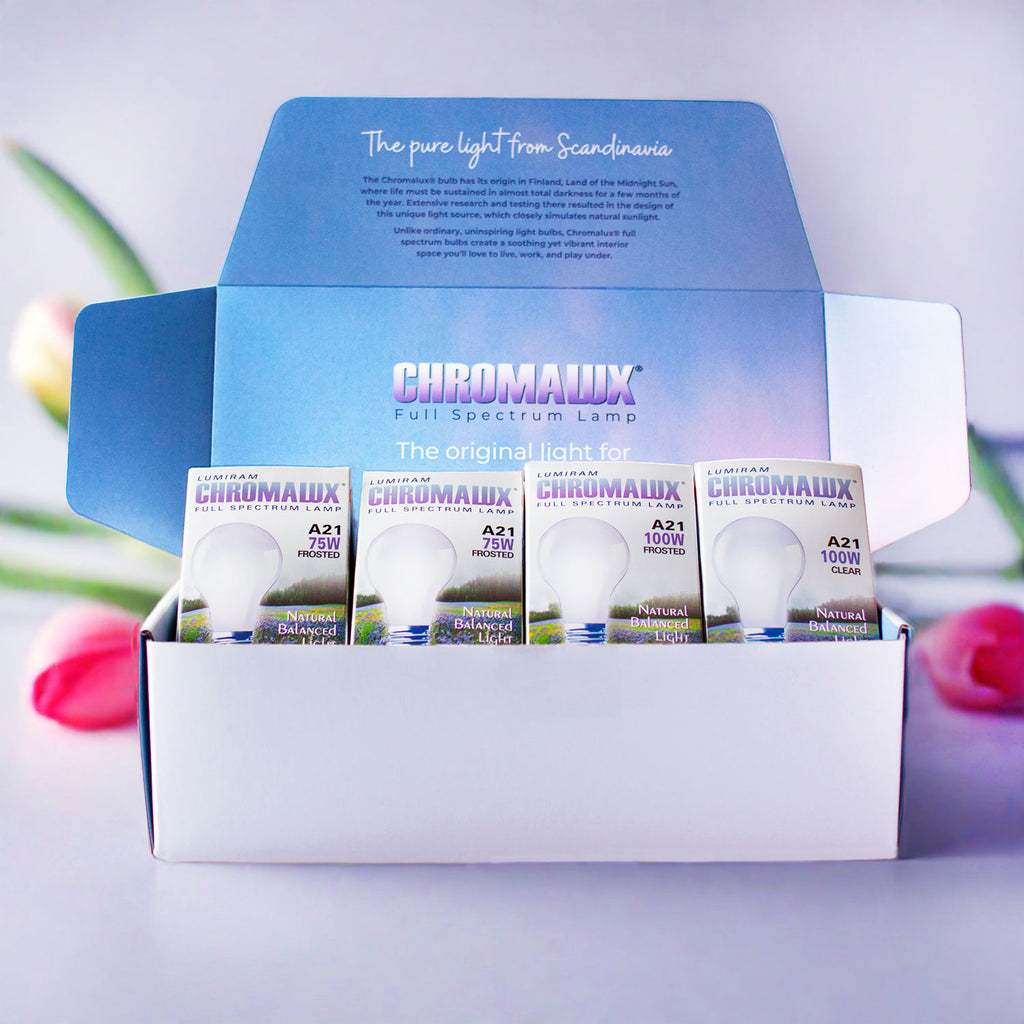
Forget checklists and sticky notes - our favorite productivity hacks have everything to do with lighting!  Keep these lighting tips in mind to easily improve your daily productivity and creativity!  Tip 1: Use bright, white lights overhead  First, ensure your workspace is well-lit: adequate illumination is a significant factor behind productivity and the presence of light is among the main triggers to our brain to wake up and be alert!  While natural daylight is always welcome, you may also want to supplement natural light with some good overhead lighting. Ensure that your overhead lighting is adequately bright, focused, and anywhere in the natural to cool white color temperature range (4100K-6000K). Color temperature is a metric of how "white" a light source appears; so called "warmer" color temperatures are more yellow or red appearing, while "cooler" color temperatures (with a higher Kelvin temperature) appear more white and contain more blue in their spectrum. It's precisely the blue spectrum wavelengths - and cooler white color temperatures -  that keeps our body and brain focused during the day!  Recommendation: Our top choice for 5-6'' recessed high hats is the Chromalux® R30 72W Enhanced Flood Bulb.  Tip 2: Illuminate your workspace with desk lamps  Once your overall space is set with bright white overheads, you'll want to illuminate your immediate desk or work area with some colorful task lighting.  While any color and contrast enhancing light bulbs like Chromalux® full spectrum will do, I find that the using the clear glass version of the A21 100W Chromalux® Incandescent bulb in particular mixes nicely with whiter overhead lighting. In writing this article, I've cycled through a few bulbs, and find the 100W clear glass incandescent to be my favorite in inducing creative flow. Of course, you could always use lower-wattage bulbs, but remember that brightness is key to keeping productivity levels high!  Tip 3: Use a bright light therapy pad or light box for an added jolt of energy in the morning With the days gradually getting shorter, some of you may have started to dust off your light therapy units that have been sitting dormant in a closet for the last few months. But, did you know you can also use these units first thing in the morning throughout the entire year for an added boost of energy? While traditionally used during the fall and winter months to combat feelings of depression and lethargy from a lack of sunlight (known as SAD, or Seasonal Affective Disorder), these devices provide a very bright and powerful supply of white light to kickstart our alertness and day. Effects are pretty instant, and you'll want to turn off your device anywhere after 10-30 minutes, depending on the intensity of the light, its distance from you, and how you're feeling.  Tip 4: Turn down the lights at night + reduce blue light  Surprise, surprise: much of our day-to-day productivity results from how well we slept the night before!  While we mostly all know to ditch the blue light from our screens before bedtime, also make sure you're dimming your lights at least two hours before heading to bed. Of course, those lights better be warm white (and lower than 3800K in color temperature!), so your body has ample time to ramp up production of melatonin - the sleep hormone - to lull you off to sleep. So remember, bright white light during the day = productivity, but block as much of it at night!  Learn more about the effect of light on sleep here.   Signing off There you have it. Hopefully, these tips can get you thinking differently about your lighting.  In traditional office spaces, keeping things bright and well-lit isn't usually an issue, but with so many of us working more from home, it's time to make your lighting a top priority! In all our years of advising customers on their lighting, it's surprising how many people work and live in dark spaces! Light is as essential as air during the day, so, let this be your sign to light up your space! May these lighting tips help you to get some excellent work done!  💡Thanks for reading! If you're interested in more articles like this one (and for even more content on everything concerning light and wellness), subscribe to our newsletter! You'll also get a code for 10% off your first order with us - so you can try out all the above recommendations! Scroll down to find the subscribe box in our footer. 

Home Lighting Recommendations

Home Lighting Recommendations

Your home is only as beautiful as the lighting used to illuminate it. When choosing the best lighting for your home, always keep these three things in mind: comfort/health, color, and readability. Especially now that our homes wear many hats throughout the day, you'll want to ensure your lighting works for you, not against you!   In lighting design, there are three general "layers" to remember. These are:    Ambient or General lighting is what we call the "backdrop" of light which fills your space with an even fill of light and sets the stage for everything else. This is usually in the form of overhead lighting of some sort, with high hat recessed fixtures being the most common in homes.  Accent lighting is used to illuminate and bring attention to specific architectural elements in your space. Think track lights, wall sconces, or pendant fixtures.  Task lighting, is the lighting used for any task at hand (like working/reading). You'll often use a desk, table, and floor lamps to read or work by.    The above are just essential elements in terms of lighting fixtures. Now, when choosing light bulbs to use in all those fixtures, we always suggest using full spectrum or the healthiest, most natural lighting in parts of your home where you spend the bulk of your time. As you figure out the lighting for each room in your home, you'll want to be aware of things like color temperature and fixture type.  So, room by room:  What type of light is best for a bedroom?  Light bulb color temperature:  "warm" light sources (anywhere from 2500K-3750K) Fixture types:  overhead lights on dimmers  table lamps/floor lamps Since we spend our time in bedrooms during the evening, opt for any light bulb in a warmer (warm white) color temperature - anywhere from 2700K-3750K is a great choice.  Keeping your light as "warm" as possible and not too bright will ensure that your body can appropriately wind down for bedtime - so keep those "cooler," whiter lights for more daytime-centric rooms such as your kitchen, living room, and office! Check out this article to learn more about how lighting affects sleep!   All overhead lighting - such as recessed can fixtures - should be on dimmers to reduce the overall brightness as the evening progresses into the night.  Shaded floor and bedside table lamps are vital for reading and relaxing.    What type of light is best for a small living room? Light bulb color temperature:  A mix of natural white (~4000K-4500K) and warm white (~2500K-3750K) light sources.  Fixture types:  overhead lights on dimmers  table lamps/floor lamps wall sconces to direct light upward With the bulk of our time spent in living rooms as multi-purpose rooms, you'll want some flexibility in your living room lighting. Things like keeping overhead lighting on dimmers and having a nice mix of lighting in terms of technology and color temperature are good ideas.  You'll want the dimmers as the evening progresses to ensure the lighting is never too bright (which, again, will mess with your circadian rhythm and the ability to wind down for bedtime).  In general, opt for lighting in the warm white to natural white color temperature range. But, above all, make sure lighting is glare-free and natural to make your environment more vivid!  If the room is small, you can add interest and the illusion of depth by placing floor lamps in corners and sconces or other types of wall fixtures to direct light upwards to create the illusion of taller ceilings.    What type of light is best for a kitchen?  Light bulb color temperature:  A mix of all three color temperatures:  warm white (~2500K-3750K), natural white (~4000K-4500K), and daylight white (~5000K-6500K). Fixture types:  overhead lights on dimmers  pendant fixtures or track lighting  under cabinet strip lighting Make sure your workspaces, such as kitchen sink and cooking areas, are well-lit using full spectrum and natural lighting.  Opt for light bulbs with as high a color rendering index as possible, or for lighting that will help accentuate the colors and textures of food, Chromalux® is among the best options here. Appreciating our foods' natural beauty, colors, and texture will also help with feelings of satiety - so choose lighting wisely in your kitchen!  In terms of lighting design tips, try using under-cabinet lighting as a great way to help illuminate dark or shadowed countertops and create a feeling of depth in your kitchen. Also, keep walls clean and light in color to help reflect light better and develop a sense of brightness and cleanliness in your kitchen.    What type of ceiling light gives the most light?   In homes, the most effective - and popular- ceiling lighting comes from recessed cans. Be sure to use only BR, R, or PAR type flood and spot lighting in these fixtures; don't make the mistake of using regular, standard "A" shape light bulbs in the ceiling, as the light is omnidirectional and won't do an excellent job of illuminating!  BR and R type flood bulbs are also called reflector bulbs and create a nice and wide beam spread of light with no defined edges; these make a great choice for the overall blanket fill of ambient lighting in a room.  PAR type lamps, are also great. These are more of a spot light, meaning they will have a tighter beam spread and a more defined edge of light.  Using both types of overhead lighting together is a great idea too! Try using PAR lamps in overhead fixtures over couches and points of interest in a room, and BR/R flood bulbs everywhere else for more general illumination! 

Home Lighting Tips

Home Lighting Tips

Ask anyone how to turn a house into a home, and they'll tell you to think of your decor. Yes, lighting is part of your decor. But what about lighting design? Definitely worth the focus since thoughtful lighting makes a world of difference. Read on for practical lighting design tips for those looking to turn your house into an oasis!   Tip 1: Layer your lighting   In lighting design, there are three general "layers" of light to keep in mind. We've used some painting analogies that may be helpful. These are:    The Background (Ambient or General lighting)    Ambient lighting is the "backdrop" of light that fills your space with an even fill of light and sets the stage for everything else. Fixture types for general lighting:  Overhead Recessed Lighting (recessed cans of all sizes, but mostly 4-5") Floor lamps The Midground (Accent Lighting)    Accent lighting illuminates and brings attention to specific architectural elements in your space. Fixture types for accent lighting:  Track lighting Smaller overhead recessed cans (3") Wall sconces The Foreground (Task lighting)     Task lighting illuminates the task at hand. For example, task lighting can be a floor lamp when reading on the couch or a table lamp to illuminate your desk while working  Fixture types for task lighting:  Floor lamps Desk lamps Table lamps   Those are the three primary layers of lighting. Try to use all three (or at the very least, two) of those layers in each room.   Tip 2: Plan your light    Be intentional with your lighting. What do we mean by this? This means having an understanding of what gets done in each room of your home. For example, you'll probably want brighter, whiter lighting in your kitchen than in your bedroom. This is especially important since most of our customers aren't too keen on smart circadian lighting (lighting that changes color temperature according to time of day)!  The workaround here is to have multiple fixtures and lamps each with the type and color temperature of bulb you'd like for each room and time of day.  Leading us to the next point:    Tip 3: Be flexible: use dimmers and different color temperatures  Part of being intentional with your lighting is being flexible: having the ability to dim your overheads and having multiple floor and table lamps where you can easily swap out bulbs is key!  What is Color Temperature:  Artificial lighting temperatures range from warm 'soft whites' (2700-3000K) to 'natural whites' (3500-4100K) and finally 'cool or daylight whites' (5000-6500K). Each temperature range has its own effect and can impact our mood/wakefulness and alertness. Read more about light color temperature here For example, warmer color temperatures have more red light wavelengths in their spectrum and promote peace, relaxation, and coziness. In contrast, cooler color temperatures have more blue light wavelengths in their spectrum and promote alertness and wakefulness.  For example, you won't want a light that is too bright or too cool in your bedroom, or it can prevent you from falling asleep at night. Read this article on lighting and its effect on sleep to learn more! Dimmers and Brightness: The brightness of your lighting holds just as much importance as color temperature. For this reason, we always suggest installing high-quality dimmers on all overhead lights so you have the greatest flexibility and control over the brightness of overhead lights throughout the day. We recommend you check out the above-linked article on lighting and sleep! Otherwise, know that your overhead lighting should be max brightness in the morning and throughout the day, and you should begin dimming them a few hours before bedtime.    Tip 4: Use plenty of table lamps   Table lamps are a home's best friend. They're easily transportable, can direct light as you see fit, and make it easy (and inexpensive) to switch out light bulbs.  Especially if changing out the larger fixtures in your home proves costly or time prohibitive, but you need light, like now, this is your answer. For example, we have many customers with various vision and/or photo-sensitivities that are unable to use the current lighting setup in their home or rental. Table (and floor lamps) make it possible to quickly and painlessly start incorporating Chromalux® bulbs as soon as possible into their daily life while figuring out arrangements for their other lighting fixtures!  💡Thanks for reading! If you're interested in more articles like this one (and for even more content on everything concerning light and wellness), subscribe to our newsletter! You'll also get a code for 10% off your first order with us - so you can try out all the above recommendations! Scroll down to find the subscribe box in our footer. 

The Benefits of Natural Light Bulbs

The Benefits of Natural Light Bulbs

We'll bet most of you prefer your light sources as natural as possible. A difficult task when most light bulbs emit a light far from pleasing or natural! So what light bulb is best for creating beautiful, natural light? That's the question we're here to answer today! What is natural light? First, what exactly is the definition of natural light? Apart from the natural light coming through the windows in your home (which needs no explanation), when most people refer to natural light bulbs, we find that they are referring to one of two things:  a) a light similar in form to sunlight, or, b) a beautiful light that is neither too cool nor too warm  Let's define these two options further:    Natural light bulbs are similar in form to sunlight.    As mentioned in this article on the healthiest light bulbs, incandescent and halogen light bulbs will be most similar in form to sunlight. Just as the sun radiates heat, producing the visible light spectrum we can see, an incandescent (and its brighter counterpart, the halogen) light bulb does much the same thing.  An electrical current heats the base of an incandescent light bulb, which produces heat and visible light when conducted through the filament housed inside. Now, onto option b:    Natural light bulbs provide beautiful light that is neither too cool nor too warm.    The terms "cool" and "warm" are references to color temperature.  Color temperature refers to the relative whiteness of light. So, while white light contains all the colors of the rainbow, its appearance will vary depending on whether its spectrum skews more toward the blue or red color wavelengths. Here are the three primary color temperatures:  Warm white A warm white light skews more toward red Natural white Natural white light is more balanced between red and blue Daylight white/cool white Just as its name entails, a daylight white light source looks like the sun at noon and will have more blue than red in its spectrum.    What light bulb is closest to natural light?   While color-tuned LEDs can get pretty darn close to the purity of the natural light streaming through your windows, we find that "analog" incandescent or halogen light bulbs provide an additional element of purity that LED cannot.  A halogen, or Chromalux® incandescent light bulb produces the purest, most natural light. Whether we're going by the first definition of natural light, a light similar to sunlight, or a beautiful light that is neither too cool nor too warm, either option will produce a far superior light. If natural light as close to pure light is what you're after, we recommend these options. Remember, light is a tool. High-quality sources of LED and fluorescent exist and provide something that incandescent or halogen cannot, like energy efficiency.  Conclusion   We suggest using incandescent or halogen bulbs throughout the day + night if you're after a greater sense of well-being. Remember also that sunlight can show itself as either bright white or warm white depending on time of day. We suggest incandescent bulbs for light that looks most like the warmer sunlight of dawn and dusk, and halogen light bulbs for light more similar to daytime daylight.    💡Thanks for reading! If you're interested in more articles like this one (and for even more content on everything concerning light and wellness), subscribe to our newsletter! You'll also get a code for 10% off your first order with us - so you can try out all the above recommendations! Scroll down to find the subscribe box in our footer.

a light bulb in a pendant fixture

A Complete Guide to Light Bulbs

Lighting controls and influences so much of our lives, yet few people put much thought into their lighting, let alone know the differences between all the types and shapes of light bulbs! Lighting is a powerful tool whose full effect is felt most if you know how, when, and where to use it!  So while we usually focus primarily on lighting and wellness, we realized more of you might need guidance on how to best use these tools efficiently!  To understand light bulbs, you should first understand these three essential components:  1. Lighting Technology, or the way the bulb uses electricity to create light. The most common technologies are incandescent, halogen, LED, and fluorescent.   2. Bulb Shape/Type determines how the light is distributed. Every bulb shape has a recommended usage or fixture to be used in. For example, flood-type bulbs are best for recessed ceiling fixtures; standard light bulbs for desk and floor lamps. Bulb Base determines how the bulb screws or plugs into a socket.  3. Color Temperature is used to describe a light's visual appearance and whiteness. Most range from the warmer 2700K to the cooler, "bluer" 6500K.    Let's jump in!  The different light technologies. A few standard technologies are used in household lightbulbs, so let's get into each. Remember, this is how a bulb uses electricity to create visible light, and the most common technologies are incandescent, halogen, LED, and fluorescent.    Incandescent Light Bulbs We start with the lighting technology used for the first-ever light bulb: the incandescent light bulb. When you think of an Edison bulb with a glowing filament inside, that is incandescent. Incandescent bulbs - in addition to the "enhanced" halogen versions we'll get into next - are what we like to call "analog" light sources. They also happen to be what many believe to be the healthiest, most natural type of lighting technology. Interestingly, they're most similar to natural sunlight, which is also an incandescent light source. How it works: filament heats up to produce thermal energy (infrared) and visible light. What it looks like: Warm and natural, though most give off amber or yellow light: most incandescents fall around 2700K to 3000K in color temperature. Some, like Chromalux® incandescent light bulbs, can be even warmer in temperature, but purify light in a unique way that won't look yellow.    Halogen Light Bulbs   Next up, we have the halogen light bulb, which - as mentioned above - is just an enhanced version of an incandescent light bulb. How it works:  Instead of a filament enclosed in a glass shell, it is first encapsulated in a quartz capsule filled with a halogen gas. This allows for a halogen-cycle chemical reaction, which allows the filament to burn hotter, in turn creating a brighter light with a whiter color temperature than a typical incandescent using only a tungsten filament. What it looks like: Pure and white.       Fluorescent Tubes  Now, onto creating light through fluorescence. Whether linear tube fluorescent lights in offices or the self-ballasted compact fluorescent lamps (CFL) with curly tubes for regular lamps, these types use fluorescence. How it works: A glass tube coated with phosphor powder is central to fluorescence. Inside the tube is a bit of mercury and inert gas. There are two electrodes at each end of the tube. An electric current in the gas excites mercury vapor, producing ultraviolet light, which is then translated to visible light by the phosphor coating in the tube.  What it looks like: Manufacturers can vary the color of the light by using different combinations of phosphors. As a result, you can find fluorescents in all different color temperatures; though bright, daylight white fluorescents are the most common variety. LED Light Bulbs How it works: LEDs, or Light Emitting Diodes, are a light source that uses semiconductors.  What it looks like: anything! LED are customizable light sources, so they can be made to any specification by changing the diode arrangement and type.    Now, let's get into the shapes of light bulbs. While there are many bulb shapes, we'll go over the most commonly found ones and the shapes we do carry to help you choose accordingly. Remember, the shape of a bulb determines how it shines and disperses its light, and every shape has a usage function: i.e., an intended fixture to be used in! For example, don't put standard "A" shape light bulbs (more on that below) in recessed ceiling light fixtures - the light would get "lost" inside your fixture and not be of much use as a light source! Instead, only use the recommended shape/type of bulb for each fixture (or lamp) in your home.      Standard bulbs - Type A Light Bulbs The 'A'-shape light bulbs are what you think of when you think of a standard household light bulb: an upside-down pear-shaped bulb that gives off light omnidirectionally (360 degrees). The numbers after the "A" determine the bulb's diameter at its widest part in 1/8ths of an inch. The standard A19 bulb, for example, has a diameter of 2.375'', or 19 divided by 8. The next step up in size is the A21, which has a diameter of 2.6'', or 21 divided by 8. A19 = standard household bulb with a diameter (at its widest point) of 2.4'' and a length of 4.25'' A21= standard household bulb with a diameter (at its widest point) of 2.6'' and a length of 5.25'' The part of the bulb that you screw into a lamp or fixture is called the base. Standard light bulbs will always use a so-called E26 (medium) screw-in base.      Type R Reflector Flood Bulbs  Next up is the Reflector flood lamp, or R-shaped lamp. The "R" stands for reflector and refers to how the light is reflected inside the bulb.  Whereas our preceding standard A-shape bulbs give off light in all directions, making them perfect for your standard and typical desk, table, or floor lamp,  reflectors are "directional" lights, with an inner reflector accentuating the light beam downward. R-shape reflector floods are most commonly used in overhead recessed can light fixtures but can also be used in tracks.  As before, the digits after the letter refer to how wide the bulb is at its widest diameter.  In order of smallest to largest, then: R20 = flood-shaped bulb with a diameter of 2.5'' and a length of 3.8''.  Used in recessed can fixtures with a diameter of 3''- 3.5'' R25 = flood-shaped bulb with a diameter of 3.1'' and a length of 4.3''.  Used in recessed can fixtures with a diameter of 3.5''-4'' R30 = flood-shaped bulb with a diameter of 3.75'' and a length of 5.25''. Used in recessed can fixtures with a diameter of 5''- 6'' R40 = flood-shaped bulb with a diameter of 5'' and a length of 6.75''. Used in recessed can fixtures with a diameter of 6'' Choosing the right size R-style bulb is a matter of measuring the diameter and depth of your recessed light fixture.  Generally speaking:   3'' diameter = R20 4-5'' diameter = R25/R30 6'' diameter = R40 All the above reflector-shape light bulbs will always use a so-called E26 (medium) screw-in base.   PAR Lamps (spotlights)    Another great light to be used in recessed fixtures, the beam on PAR lamps will be tighter with a more defined edge (more of a spotlight) than Reflector R lamps, which have a wider "flood" effect. PAR20= spot lamp with a diameter of 2.5'' PAR30= narrow flood lamp with a diameter of 3.75'' PAR38=narrow flood lamp with a diameter of 4.75'' Choosing the right size PAR-style bulb is a matter of measuring the diameter and depth of your recessed light fixture.  Generally speaking:   3'' diameter = PAR20 4-5'' diameter = PAR30 6'' diameter = PAR38 All reflector-shape light bulbs will always use a so-called E26 (medium) screw-in base.     B10 - Candelabra (Candle) Bulbs These bulbs resemble the shapes of candle flames and are most commonly used in candelabra fixtures such as chandeliers and sconces.  While the shape is that of a candle flame, this differs from the base, which can either be your standard medium E26 screw-in base, or the skinnier E12 candelabra base, which is commonly used in chandelier and sconce fixtures.      Globe bulbs - Type G Bulbs Commonly used in bathroom vanity fixtures or for decorative purposes, globe-shaped bulbs have a perfectly spherical shape and are available in either the smaller E12 candelabra base, or E26 medium base. Chromalux® carries two globe bulbs: G25 - globe-shaped bulb with a 3.125'' diameter and an E26 medium base G16 ½ - globe-shaped bulb with a 2'' diameter and an E12 candelabra base   MR16 Bulbs (Multifaced reflectors)   The MR bulb is a small spot-type light bulb for directional, accent lighting used primarily in track lighting. The most popular are MR16, which are 2 inches in diameter. These bulbs are commonly found with two bases: GU 5.3 (Bi-pin) for low-voltage track fixtures, or GU10 (twist and lock), for line voltage fixtures.   Lighting Metrics: Describing Visible Light Now that we've got the technology and shape of light bulbs down, let's learn more about the different metrics used to quantify the visible light they produce. In other words, the color appearance of the light (how white the light is), brightness, and how well it depicts color.  Color temperature Color temperature is a measure used to describe a light source's visual appearance and whiteness. Just like natural sunlight has many shades, artificial lighting also comes in many shades of white. These are a light's color temperatures, represented as degrees Kelvin (˚K).  The color temperature range of most light bulbs falls between 2700K and 6500K.  The lower the Kelvin temperature, the "warmer" or more yellow the light, getting "cooler" and whiter as the Kelvin temperature increases.  Therefore, of the above 2700K-6500K range, 2700K represents a warmer light, and 6500K, a bright white light.  To learn more: check out this article Brightness (lumens) The brightness of the visible light emitted by a bulb. While wattage describes a bulb's energy draw, lumen count better describes how much light a bulb emits or how bright the bulb is.  Wattage The energy draw of a light bulb. Whereas wattage was used as a reference point for brightness in the past, that is no longer the case with new energy-efficient lighting technologies. Nowadays, use lumen count instead to determine how bright a light source will be.  Color rendering index (CRI) CRI is a measure on a scale of 1 to 100 of how accurately a light source shows colors compared to natural sunlight (with a CRI rating of 100). A light bulb with a CRI above 90 is considered good, and above 95, excellent for color vibrancy and a more natural-looking interior. Stay away from CRI ratings below 85, which have a dulling effect on surroundings.  Recommended to read next: All about light and health

Natural Light for Homes

3 Simple Ways to Increase Natural Light in a Room (No Painting or Construction Necessary!)

Natural light. Something we intuitively love. Uplifting and inspiring, natural sunlight evenly illuminates interiors with balanced, pure light that makes everything look better, and by extension, makes us feel better.  So what to do if your home doesn't have natural light in ample supply?  While tips like installing skylights and larger windows help, sometimes a more impermanent, simple solution is necessary.  If your home lacks windows, or you're trying to get the best use out of a basement, the following three simple tips will help you in your quest to increase natural lighting. All without having to paint a single wall!  Use Reflective Objects Reflective objects such as mirrors and glass ornaments, such as bowls and vases will serve a dual purpose in a room sans natural light. Mirrors can make spaces look larger than they really are, while also helping to reflect light.  Glass will also catch light nicely and can add a sense of depth, brightness, and clarity to a room.  Include Natural Elements Fill your room with plants and flowers (make use of your glass vase!)  Incorporating natural elements into your space will help "enliven" it.  Be Strategic About Your Lighting If a room is low in natural light, you're going to need light bulbs to help illuminate your space in the first place. If you choose the proper lighting, it can help brighten up your space with vivid color, while also adding interest and creating the illusion of depth.  Use High CRI Light Bulbs In a case where you don't have natural light, a light bulb with high CRI is one of the most critical factors to look out for.  CRI, or color rendering index, is - in our humble opinion - a measure most indicative of a light source's quality. CRI measures on a scale of 1 to 100 how accurately a light source reproduces colors as compared to natural sunlight (which has a CRI rating of 100, naturally).  A light bulb with a CRI above 90 is considered good and above 95, excellent for color vibrancy and a more natural-looking interior. Next, layer your light in a visually interesting way Now that you have the light bulbs chosen, you'll have to arrange your light in a visually interesting way.  The key to this is understanding the three types of lighting:  Ambient, general lighting, which blankets your space with general light.  Accent lighting, which adds visual interest to a room by accenting architectural elements or highlighting works of art.  Task lighting, such as a desk lamp or floor lamp to bring more focused light to an area.  We generally advise customers to use cooler light (anywhere in the 4000K-5000K range) for their ambient overhead lighting, and to choose warmer light for accent lighting.  We hope this helps!  These quick tips should help you optimize the needs you and your space require and deserve, all without lifting a single hammer!   Some more resources: Thanks for reading! We live and breathe natural, beautiful lighting.  Now more than ever, our homes are our sanctuaries. All the energy you put into planning out and improving your space will reward you tenfold!  If you're looking for the highest CRI standard light bulbs and flood bulbs for your home, we recommend any Chromalux® full-spectrum lamps. Chromalux® is the original "natural light" light bulb for health and wellness that, plainly put, makes any space look better.  Browse our best-selling full spectrum natural light bulbs!

×