SAD Light Therapy

The best light bulbs for SAD (Seasonal Affective Disorder)

The Best Light Bulbs for Seasonal Affective Disorder

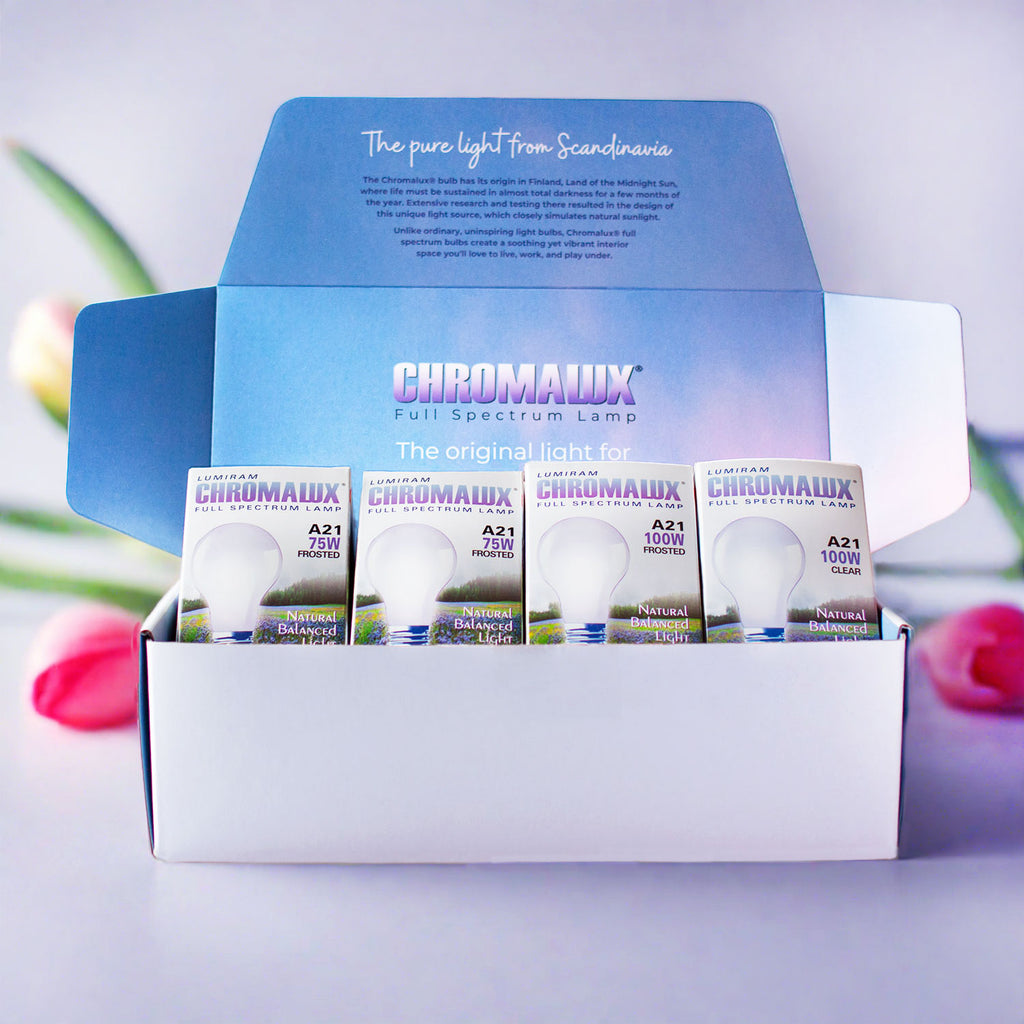
Seasonal Affective Disorder (SAD) is a common struggle, affecting many people during the darker months of the year.  One of the most effective ways to combat SAD is to get more bright white light in the morning and daytime.  But what do you do when the sun is scarce to begin with? The solution: use light therapy and full spectrum light bulbs specifically created to improve your mood and alleviate those rundown feelings that are common this time of year! Stick around, and today, we will explain how to choose the best full spectrum light bulbs for SAD! First, let's understand a bit more about SAD.  Understanding Seasonal Affective Disorder (SAD) SAD refers to Seasonal Affective Disorder, a type of seasonal depression that begins in the darker months of the year. While many of us tend to feel slightly more sluggish during the fall and winter seasons, SAD is a diagnosis where individuals regularly begin to show signs of discomfort and sadness in the fall, persisting through the winter months. Common symptoms of SAD include: Feeling depressed or hopeless Feeling low in energy, sluggish, and agitated Problems sleeping Difficulty concentrating The Science Behind Light Therapy for SAD Most of the symptoms of SAD have to do with the decrease in natural light in our environment. Light is one of the main (most important) environmental timekeepers for our circadian rhythm and the factor that controls hormone release and overall mood. To understand the effect of light on mood, simply think back on how you feel walking into a dimly lit, dingy space versus a brightly lit room with plenty of natural light!  Sunlight has plenty of blue wavelengths that interact with photopigments in our eyes. The presence of light (and specifically those blue wavelengths) tells our brain to inhibit the production of melatonin (the sleep hormone) while ramping up the secretion of cortisol (for alertness).  Bright white light therapy is a treatment for SAD that uses artificial bright white light intended to mimic natural sunlight in terms of its brightness (measured in lux) and color temperature (usually between 5000K and 6500K, which is that of natural sunlight at noon).  Exposure to this light helps to regulate circadian rhythms and neurotransmitter levels in the brain by suppressing the production of melatonin, a hormone that induces sleepiness, while increasing serotonin, a neurotransmitter associated with mood regulation.  SAD light bulbs vs SAD light therapy lamps (bright light boxes)  You've likely seen full spectrum bright light therapy boxes for SAD and full spectrum light therapy pads on the market. These are lamps and bulbs in one unit, specially designed to provide a very bright output of the bright white light necessary to trigger a circadian response, alertness, and better mood.  Those light boxes and lamps are distinct and different modalities than the SAD light bulbs we are about to discuss.  In a nutshell, SAD light bulbs provide a beautiful white light spectrum perfect for enhancing alertness and uplifting mood and may be used with no restrictions, while SAD light boxes are usually quite bright and may only be used for about 10 to 30 minutes max per day.  The best option would be to use both together: bright light therapy boxes in the morning and upon waking and SAD light bulbs throughout the morning and daytime hours as your general light source.  What are SAD light bulbs? Again, to summarize, SAD light bulbs are specialized (usually full spectrum) bulbs that—by design—should mimic natural sunlight in terms of brightness and whiteness. While they are not as bright as full spectrum light therapy boxes, which give off at least 10,000 lux of light (a measure of brightness), they are a great supplement to using light boxes or trying to get sunshine first thing every morning!  Essential Qualities of SAD light bulbs Your SAD bulb should be bright and white, full of the biologically necessary blue light spectrum that triggers our circadian rhythm and all the downstream processes associated with wakefulness. But it should also have a balanced and full spectrum of all the visible colors.  -Full spectrum of blue light (not just a spike in blue light at 380-400 nm, as is typical with most cooler white LED bulbs) -Full and balanced spectrum of all the visible colors The Benefits of Full Spectrum Light Bulbs for SAD So far, we've gone over the science of SAD light therapy and light bulbs, how and why they help with SAD symptoms like depression and sluggishness, and the differences between SAD light therapy boxes and SAD light bulbs. By now, it should be pretty obvious what are the benefits of SAD light bulbs but to summarize, SAD bulbs help with: -uplifting mood -increasing energy -increasing motivation -helping with sleep (if used only during the morning and daytime)!  The primary mechanism of action here is simple: these bulbs have plenty of healthy blue light wavelengths in addition to a full and balanced spectrum of visible light.  Now that we know the basics let's take it a little further!  How to Choose the Right Full Spectrum Light Bulb for SAD Choosing the correct full spectrum light bulb for SAD involves considering several factors. The bulb's lux level, color temperature, and Color Rendering Index (CRI) are all important. Lux level refers to light intensity, with 10,000 lux often recommended for SAD treatment. Color temperature, measured in Kelvin, indicates the warmth or coolness of the light. A higher CRI means the light source can more accurately reveal the colors of objects. Here are some key factors to consider when choosing a full spectrum light bulb for SAD: Lux level: Aim for a bulb with a lux level of 10,000 for optimal results. Color temperature: Choose a bulb with a color temperature that mimics natural daylight (around 5000K to 6500K). CRI: Look for a bulb with a high CRI (above 80) for the best color accuracy. Why Chromalux® is the Best Full Spectrum Light Bulb for SAD: While many standard bright white full spectrum LED options may be perfect for SAD, many miss the mark entirely.  A light bulb for SAD is usually a bright white LED, and while it may be full spectrum, have a white color temperature, and high CRI (color rendering index), it just doesn't feel right. In other words, many full spectrum light bulbs for SAD may be great on paper/in theory, but in practice, they just don't feel right. Your body can tell the difference between an LED light source and an analog, full spectrum incandescent light source, just as it can tell the difference between an LED light source and the sun.  If a light bulb for SAD is supposed to mimic sunlight, why try to emulate it with an artificial light source (and one that lacks one of the main components of sunlight, infrared light)? Chromalux® full spectrum light bulbs offer: -a balanced full spectrum of visible and nourishing infrared light -an "analog" light source vs. LED diodes Created in Finland (land of the midnight sun) over 60 years ago, the Chromalux® full spectrum light bulb enhances colors and contrast, improves visibility, and uplifts mood in a way no ordinary SAD light bulb ever could.  We encourage you to see and feel the difference this unique light source could make in your life—not only during the winter to help with SAD but also all year round.  Recommendations for the best light bulbs for seasonal affective disorder In addition to using a full spectrum bright light therapy lamp, we highly recommend swapping out some of your generic bulbs for Chromalux® full spectrum light bulbs for seasonal affective disorder. We find that the following three bulbs by Chromalux® work best for depression and SAD (though any will work):  Chromalux® Full Spectrum 100W Incandescent Bulb (Clear Glass) Chromalux® Full Spectrum 150W Incandescent Bulb (Clear Glass) Chromalux® Full Spectrum 72W Enhanced Bulb (Frosted Glass) These bulbs offer a unique combination of purity and color balance, bringing you a non-LED, nourishing, incandescent glow that supports your well-being. It's also worth mentioning that sometimes, our sadness is programmed into us around this time of the year. You may start feeling relief from just shifting your focus during this time of the year to feelings of renewal and nourishment. Armed with a different mindset and healthier lighting, you may see winter in a different light!  All the best in light and health!

Can You Use Light Therapy Even if You Don't Have SAD?

Can You Use Light Therapy Even if You Don't Have SAD?

We've spoken extensively about the difference between full spectrum light bulbs and light therapy - are they interchangeable terms for dealing with SAD/the winter blues?  Today, let’s talk a bit more in-depth about light therapy: what it is, the different types of devices, and most importantly- whether or not you even need it!  Many of you (especially those who’ve been enjoying our Chromalux® full spectrum bulbs in the home!) wonder if you still need supplementation from these bright light therapy devices - isn't it enough to just use Chromalux® bulbs?  So let’s learn more... Light therapy - in the form of light therapy pads and larger light therapy boxes - is more specialized in form and function than just full spectrum light bulbs on their own.  Whereas full spectrum light bulbs may be used without restrictions, light therapy is, as its name suggests,  a therapy - and can be used up to ~ 30 minutes per day.  Light therapy Produces very bright light (at least 10,000 lux). More bright than one could comfortably look at, which is why we allow the light to enter the eyes peripherally by using the device off to the side.  Has a color temperature between 5000K-6500K, which is a cool white/daylight white light full of energetic blue light wavelengths. For the same reason you’re told to avoid blue light in the evening, blue light is absolutely crucial to trigger our circadian response and wake us up in the morning!  Do you need light therapy even if you don’t have SAD?  Light therapy is still a great idea to use every morning to help get energized - even if you don’t have a clinical diagnosis of SAD. Most of us feel a bit underwhelmed this time of year, and lighting always helps!  Lightboxes vs. light pads Lightboxes are the larger, more solid modular devices that can last you  a lifetime (just change out the bulbs as necessary!). Perfect for those with clinical SAD, our medical-grade device uses our high-quality Lumichrome® full spectrum fluorescent, high CRI 5500K bulbs, which are among the closest replication to sunlight in an artificial light source.   Light pads, on the other hand, are more portable. Many have multiple brightness settings plus a built-in timer, so you can just set your dose of light and forget it. Many of these portable units are full spectrum LED based. How to choose light therapy? A question we get from you guys all the time! For most of you, the portable units will be just fine to use and make a difference. If you need extra light support, or truly cannot tolerate LED lighting, then you might find a trusty lifelong companion in our Aurora™ full spectrum light therapy box instead! 

How to Choose the Best Light Therapy for SAD and Depression

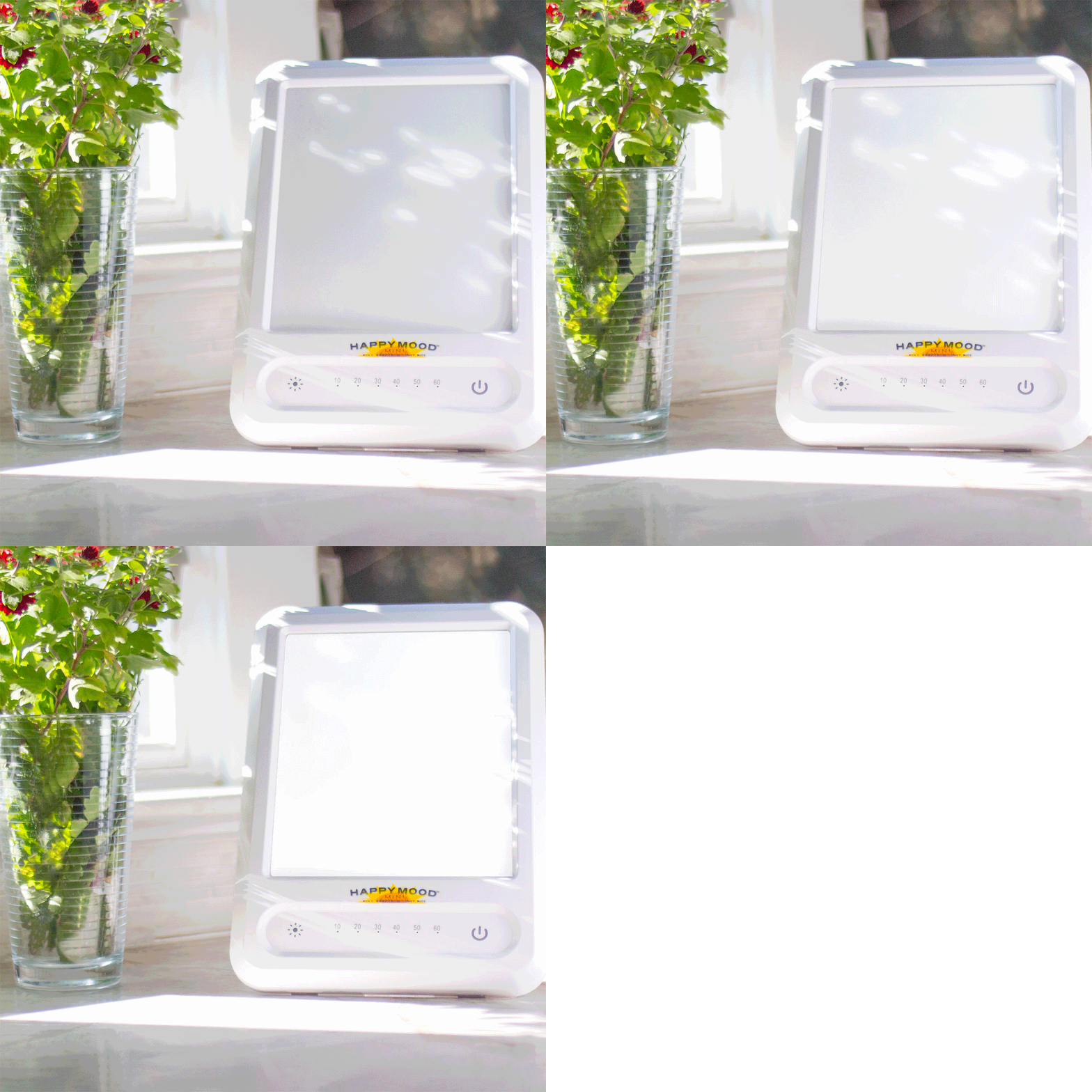
  As the seasons change, many individuals find themselves struggling with Seasonal Affective Disorder (SAD), a type of depression that typically occurs during the fall and winter months when daylight is scarce. One highly effective treatment is bright light therapy. This involves exposure to artificial light that mimics natural sunlight, which can profoundly improve mood and energy levels. Let's explore the benefits of bright light therapy and how it can be used to combat seasonal depression! What is Seasonal Depression or SAD? Seasonal depression, often referred to as SAD, is characterized by symptoms similar to those of general depression. The lack of sunlight during these shorter days of the year disrupts our biological clocks, leading to depressive symptoms.  What causes SAD, and what are the common symptoms?  Without enough bright white light exposure to stimulate the hypothalamus, a part of the brain linked to our body's internal clock controlling the sleep-wake schedule, our body may increase its production of the sleep hormone melatonin while decreasing the production of serotonin, the feel-good brain chemical that helps regulate mood. Bright light therapy helps reset the internal clock, offering those suffering some relief from their symptoms.  Common symptoms of SAD   Feeling depressed and hopeless Feeling low in energy, sluggish, and agitated Sleep disturbances Difficulty concentrating  What is Bright Light Therapy? Bright light therapy, also known as phototherapy, exposes individuals to a light box that emits a very bright light (usually 10,000 lux) for about 20-30 minutes each day, typically in the morning, to help reset the body's internal clock.  As mentioned above, full spectrum light therapy uses specialized bright, artificial lighting to treat SAD or to provide a daily dose of sunshine for those who don't spend enough time outside in natural sunlight.  What is Bright Light Therapy Used For? The most common use of light therapy is to treat SAD, a type of seasonal depression during the fall and winter caused by a lack of sunshine and natural light. But you don't need to suffer from a clinical diagnosis of SAD to enjoy the stimulating benefits of bright light therapy: think of bright white light as a vitamin to be taken daily for optimal health and wellness!  Bright Light Therapy for SAD SAD (seasonal affective disorder), aka the winter blues, is characterized by feelings of depression that begin as soon as daylight hours diminish during the fall and winter.  Light Therapy to set your circadian clock or for light deprivation  As we mentioned above, bright light is a necessary "vitamin" for our body - you don't need to suffer from a clinical diagnosis of SAD to enjoy the stimulating benefits of bright light therapy!  Just as in its use as therapy for SAD, light therapy can help prevent issues associated with lack of sunlight: without the presence of bright light early each day, our body has a difficult time waking up in the morning, staying alert throughout the day, and falling asleep at night.  For those who are indoors when the sun is out, supplementing bright light through light therapy every morning that you aren't outside in the sun will benefit you greatly. Light Therapy for Depression We hope you see the trend here; light therapy helps regulate mood and energy and keeps our bodies running smoothly!  Since bright light stimulates and helps regulate our hormones and neurotransmitters, it isn't surprising that studies suggest light therapy can be helpful for those suffering from bouts of depression—even if they are not seasonally related. Specifically, as mentioned before, bright light affects the up-regulation of serotonin, the neurotransmitter linked to mood/happiness and well-being.   How does bright light therapy work?  So we've spoken about its uses, but how exactly does full spectrum bright light therapy work? The role of Blue Light  What do we mean by blue light? It may be helpful to see a diagram of the electromagnetic spectrum and the visible light spectrum within it. Blue/Violet light is at the far end of the visible spectrum, right before ultraviolet (UV) light.  As seen below, wavelengths get shorter and more energetic as we move up the spectrum. Midday sunlight is mainly comprised of the higher part of the visible light spectrum—blue light.   10,000 lux: bright blue light Blue light on its own may be full of energy, but to trigger a significant cascade of biological responses in our body, we need a lot of it. Think of it like this: the more you put in, the more you get out! In terms of brightness, what exactly do we need? You undoubtedly have already seen the answer everywhere: 10,000 lux. Lux, pronounced (lucks), is a unit of illumination. The higher the lux, the brighter the light source. For reference, daylight on an overcast day around noon is around 1200 lux.   Our eyes: a window to the soul and our master clock Our eyes are constantly taking in information from the environment around us. Perhaps surprisingly, not only do eyes allow us to see, but they also reserve a part of their ability for non-visual tasks, such as determining how much light is in our environment!  Our eyes detect light through specialized non-visual photopigments called melanopsin (a light-sensitive retinal protein). Melanopsin is most reactive to shortwave blue light, which, if activated by the presence of light, sends off a signal to our brain's hypothalamus. Within the hypothalamus lies a cluster of cells (called the suprachiasmatic nuclei, or SCN) whose job is to coordinate our daily cycles of behavior and physiology with our external environment.  In other words, our circadian rhythm (master clock) runs internally but responds and adapts to our external world. The circadian rhythm runs in a cycle of approximately 24 hours, and apart from controlling our sleep/wake schedule, it controls other biological processes, such as the timing of hunger, digestion, body temperature, and the release of hormones to maintain energy throughout the day.  How to choose the best bright light therapy for SAD Now that we know more about the workings of light therapy, how does one choose a device to get their daily dose? Here are some criteria to help in your decision. Lux: As mentioned before, your unit should provide at least 10,000 lux of light at a distance of ~ 2 feet to trigger any meaningful health response.   Now, let's decide on the form:  Light Pads Available in different sizes, you might find light "pads" similar in appearance to a kindle or iPad, or you might find replaceable light "box" units where you switch out the bulbs. Light Boxes Lightboxes may be larger (most measure 2 feet in diameter), but their practicality lies in their lifespan: one box should last a lifetime - provided that you change out the light bulbs as needed! Changing out the bulbs is great, as it allows you to change bulbs as they begin to dim naturally over time. This next point is critical to us, as it will enable you to determine whether your light source is LED or fluorescent.  LED vs. Fluorescent Light Therapy The most common light technology used for light therapy these days is LED.  And for many, LED doesn't sit well with their physiology. We wish we could send you on your way with incandescent or halogen light bulbs, but those options don't produce a blue enough light to serve as true light therapy (plus, light bulbs on their own may not be bright enough a light stimulus unless you were to use many bulbs). Full spectrum fluorescent light therapy will be your best bet.  Can't I use full spectrum or daylight light bulbs for SAD?  It won't hurt, but relying on light bulbs alone will leave you wanting more. A common misconception is that a full spectrum light bulb serves as light therapy on its own. We wish that were the case, but the dose of light needed to elicit a biological response in humans is bright - so bright that you wouldn't be able to use it as a general light source. Light therapy uses full spectrum lighting but includes other parts a light bulb on its own can't provide. We wrote an article that goes into more detail about whether you can use full spectrum light bulbs for SAD. We highly recommend reading it! The same goes for daylight bulbs - which, by the way, say nothing about a light's quality or fullness of spectrum. Daylight bulbs usually only refer to color temperature, about 5000-6500K. That might be the blue-white light we need for light therapy, but again, light bulbs won't cut it on their own.  Of course, Full spectrum bulbs such as Chromalux® help so much with well-being and have many other awesome benefits (like nourishing infrared) over standard, general-use light bulbs. Use them in conjunction with your light therapy sessions!  How to Use Bright Light Therapy  Use your light therapy device in the morning Light therapy is most effective when used in the morning. (You don't want a bright blue light to keep you wired through the evening)!  Keep it on the kitchen counter or your work desk in the morning. Place up to 2 feet away from you, to your side. Your light therapy manufacturer can tell you exactly how close you should be to your device to get benefits, but a general guideline is about 2 feet.  Let the light shine into open eyes, but don't look at it directly! The most important thing is for light to reach your open eyes. If you work using blue light filtering glasses, you'll want to take those off while using light therapy for the most effective dose.  How long should I use a light therapy lamp per day? Try for 20 minutes at first to see how you respond; you should begin to feel alert. If you start feeling jittery, that's an indication to place your unit a little further away or use it for less time. You'll soon learn how your body best responds, and your needs may change over time! Closing Thoughts Well, that, in a nutshell, is bright light therapy. We hope you'll consider adding it if it's not part of your wellness toolkit! And, if you're a seasoned user, we hope you were able to glean some helpful information from this article! Read on for some of our recommendations to nourish and support your well-being this fall/winter season...   Full Spectrum Light Bulbs for SAD We highly recommend using Chromalux® Full Spectrum Light Bulbs to help support your mood and well-being. Unlike other full spectrum bulbs available on the market these days, these use a unique glass technology to purify light in a way most reminiscent of natural sunlight: vivid colors, increased contrast, and that particular feeling of well-being one can only get from being in the sun. They also have nourishing infrared light, the spectrum of light sunlight provides, but most full spectrum LED bulbs do not.  Consider using the above in places where you use light in close proximity, i.e., a bedside table lamp or a floor lamp by the couch. Light is like a vitamin: you want to make sure what you take in is high quality and valuable for your body. Make the light that's closest to you count! Light Therapy Boxes for SAD We start with our brightest and best medical-grade non-LED full-spectrum light therapy box, Aurora™ 10,000 Lux Full Spectrum Light Therapy Box. Aurora™ is the perfect desk or kitchen counter companion during the darker months (or throughout the year for Circadian support!) . While most light therapy lamps are throw-away, the Aurora™ light therapy box will be in your wellness toolkit for the rest of your life. All you'll need to do is change out the bulbs as needed!  If you prefer something more portable, try the HappyMood Mini Light Therapy Pad. It offers portable light therapy with adjustable levels, and it is still highly effective!   💡Thanks for reading! If you're interested in more articles like this (and for even more content on light and wellness), subscribe to our newsletter! You'll also get a code for 10% off your first order with us - so you can try out all the above recommendations! Scroll down to find the subscribe box in our footer. 

full spectrum light bulbs for SAD

Can You Use Full Spectrum Light Bulbs for SAD?

With the shorter fall and winter days comes less time under natural sunlight.  For some, this time of year is nostalgic and cozy. For many others however, the time leading up to and through winter is a difficult one: feelings of sadness, fatigue, and a general lack of motivation start to feel commonplace. Feelings may vary, but many of us will feel the effects of less time under the sun. Today we answer an oft-asked question during this time of the year: can I use full spectrum light bulbs for SAD or the winter blues?  Let’s first define a few terms: What are the winter blues: The winter blues refers to Seasonal Affective Disorder (SAD for short), a type of seasonal-related depression. Though most of us have a tendency towards feeling a bit more lethargic during the fall and winter months, SAD is a diagnosis in which people consistently start to display symptoms of malaise and sadness in the fall, continuing into the winter months.  What are the symptoms of SAD?  Common symptoms of SAD include: Feeling depressed or hopeless Feeling low in energy, sluggish, and agitated Problems sleeping Difficulty concentrating What causes SAD?  During the fall and winter months, we don’t get enough of the sunlight exposure needed to stimulate the hypothalamus, a part of the brain linked to our body’s internal clocks controlling the sleep-wake schedule, among other things. Without enough bright light stimulation from the sun, our brain may increase its production of the sleep hormone melatonin, while decreasing the production of serotonin, the feel-good brain chemical that helps regulate mood. What are full spectrum light bulbs? What is a light therapy box? Are they different? A full spectrum light bulb emits a light spectrum that simulates the full visible light spectrum of natural sunlight (learn more about full spectrum lighting here). A full spectrum light bulb is a light bulb like any other in that it may be used without restrictions, yet it emits the full visible light spectrum our bodies need.  A light therapy box provides striking, bright white light using fluorescent or LED light in a color temperature between 5000-6500K, which is consistent with the color temperature of the sun at noon. Light therapy boxes emit 10,000 lux (a measure of the perceived brightness of light) of blue/white, more energetic wavelengths, intended to trigger a biological response in our bodies.  Light boxes produce very powerful light, and are therefore intended as therapy and not a source of general illumination. The goal is to sit in front of a light box for up to 30 minutes per day, allowing your eyes and body to receive a simulation of sunlight that would otherwise be difficult to receive this time of the year.  As you can see, full spectrum light bulbs and light therapy boxes are different; use full spectrum light bulbs as you would a normal light bulb - that is for general illumination, but much more enhanced! Light therapy is precisely as its name describes - a therapy - and offers our eyes and bodies therapeutic bright doses of “sunlight” to regulate our body’s processes and start feeling like our normal selves again during these duller months. So … can I use full spectrum light bulbs for SAD? Of course, though not as prescribed by a doctor for the standalone treatment of SAD. We like to think of full spectrum light bulbs as a complement to therapeutic doses of bright light therapy, providing us with the full spectrum of visible light our bodies need. However, over the years, we've realized that there exist certain individuals for whom the super bright light of a light therapy box may just be too much to handle (those with eye sensitivities for example). For these people, we always recommend using the highest wattage Chromalux® full spectrum light bulb that their eyes can comfortably tolerate.  Our recommendations for the best SAD light bulbs Not all full spectrum lighting is made equal. If you're forgoing a SAD light box for certain sensitivities to light, you'll find the majority (all?) of the full spectrum light bulbs out there to be difficult to tolerate as well: they are all daylight white LED, and while they may have a full spectrum of visible light, be flicker-free, etc., the light emitted is still "digital" - it's a bit abrasive and a far cry from the analog technology of incandescent or halogen light bulbs, which produce a light most like natural sunlight.  So, if that's you (or someone you love), any of the following Chromalux® full spectrum light bulbs will make a big difference in how you feel. The analog glow of incandescence supports our bodies and our health (and has the added benefit of nourishing infrared), while the signature neodymium-compounded glass filters light in a purifying and soothing way - unlike any ordinary light bulb. We particularly love using this Chromalux® 100W incandescent bulb in desk and floor lamps for extra dose of creativity and inspiration during these duller months!  Some other light bulbs we find can work well for SAD or depression in general:  Chromalux® Full Spectrum 100W Incandescent Bulb (Clear Glass) Chromalux® Full Spectrum 150W Incandescent Bulb (Clear Glass) Chromalux® Full Spectrum 72W Enhanced Bulb (Frosted Glass) Final thoughts If you suffer from the winter blues, you’ll need to supplement your mornings with a bright light therapy box to help eradicate those feelings and reset your body's internal clock. If you just feel a little dull during the winter, though perhaps not to the extent of SAD, you can still benefit from the stimulating and awakening effects of bright light therapy.  Our medical-grade Aurora™ 10,000 lux full spectrum light therapy box is a perfect desk or kitchen counter companion during the darker months. Try the HappyMood Pro SAD Lamp for portable light therapy with adjustable levels. In addition to using a light therapy unit, we highly recommend swapping out some of your generic light bulbs for Chromalux® full spectrum light bulbs. These bulbs offer a unique combination of purity and color balance, in addition to bringing you a non-LED, nourishing, incandescent glow that supports your well-being. It’s also worth mentioning that sometimes, our sadness is programmed into us around this time of the year. You may start feeling relief from just shifting your focus during this time of the year to feelings of renewal and nourishment. Armed with a different mindset and healthier lighting, you may just start to see winter in a whole different light!  All the best in light and health!   Pro-tip: If you can't swap out all your light bulbs, try the supplemental approach and replace only the bulbs in places where you use light in close proximity: i.e., a bedside table lamp, a desk lamp by your workspace, or a floor lamp by the couch. Make the light that's closest to you count - it makes a world of difference!    💡Thanks for reading! If you're interested in more articles like this (and for even more content on light and wellness), subscribe to our newsletter! You'll also get a code for 10% off your first order with us - so you can try out all the above recommendations! Scroll down a bit to find the subscribe box... If you found this helpful, odds are someone you know might too! Share this article with friends that may find the above helpful on their wellness journey. Spread the light! 

×