

 Standard Bulbs
 Flood Bulbs
 Chandelier Bulbs
 Globe Bulbs
 MR16
MR16




Most of us grew up believing that more light is better. Brighter bulbs, higher lumens, stronger overhead fixtures. And yet anyone who's spent an evening squinting under a glaring light — tired eyes, flattened colors, that low-grade feeling of strain — knows that brightness alone doesn't tell the whole story.
So does lighting actually affect your eyesight? Not in a permanent, clinical sense. But the kind of light you're under absolutely shapes how your vision performs — and how much effort it takes to see comfortably. The difference often comes down not to how much light a bulb puts out, but what kind of light it is.
Your Eyes Know the Difference
You've probably walked into a space and felt at ease without being able to say why. The light felt right — clear, calm, easy. Then there are other rooms, just as bright or brighter, where something is off. You find yourself working harder to focus. Colors look a little flat. Reading after twenty minutes starts to feel like a chore.
This isn't imaginary, and it isn't just about lumens. It's about the spectrum — and the visual fatigue that builds when artificial light is unbalanced, too harsh, or heavy in certain wavelengths. That kind of lighting for eye strain is something most people experience regularly without connecting it to the bulb overhead.
Glare is part of it too. Glare reduction lighting isn't just a commercial feature — it's a meaningful quality-of-life factor for anyone doing close work for hours at a time. Light that diffuses evenly and reduces harsh reflections simply asks less of your visual system.
What Is the Best Light for Your Eyes
The best light for your eyes isn’t necessarily the brightest — it’s the one that feels clear, balanced, and easy to be in.
Good lighting tends to:
-
reduce glare rather than create it
-
support contrast, so details are easier to distinguish
-
feel steady and natural, not sharp or overstimulating
Most people can recognize this intuitively.
Some spaces simply feel easier to see in, even if the brightness is similar. That difference often comes down to the quality of the light itself.
If you’re specifically looking for recommendations, you can explore our guide on the best light for your eyes.
What the Research Shows
In 1988, researchers Cohen and Rosenthal published a clinical study in the Journal of Visual Rehabilitation that looked specifically at how light quality — not brightness — affects visual performance.
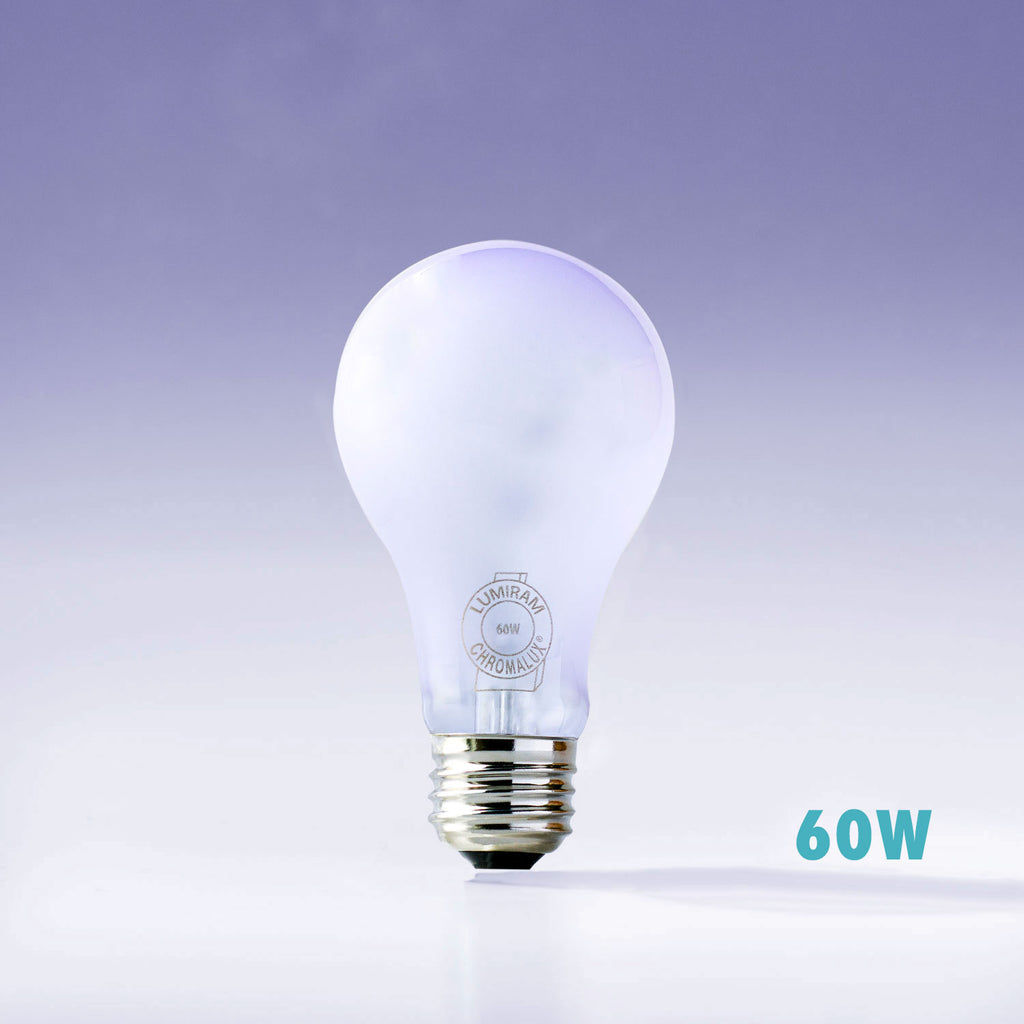
They studied individuals with low vision performing near-point tasks like reading under different lighting conditions. The light source used in the study was the Chromalux® neodymium incandescent bulb itself — not a generic approximation of the technology, but the actual product.
The findings were clear: participants didn't need more light. They needed better light.
Under the Chromalux® bulbs, participants showed improved near-point visual performance, enhanced contrast perception, and meaningfully reduced glare sensitivity. The improvement didn't come from turning up the wattage. It came from refining the spectrum — filtering out a narrow band of yellow wavelengths (around 570–590nm) that can create visual muddiness and make edges harder to distinguish.
That makes this more than a study inspired by the same technology. It's direct clinical evidence of how Chromalux® affects visual performance — published in a peer-reviewed journal, conducted on real participants doing real near-vision tasks. Does lighting affect eyesight in a lasting way? No. But this research suggests it has a measurable effect on how your vision performs in the moment.
Full Spectrum Light Benefits — and Why LEDs Feel Different
Natural daylight covers the visible spectrum in a smooth, continuous distribution. It's what our eyes evolved under, and it's still what they respond to most comfortably.
Most modern LED bulbs don't work that way. They're efficient and long-lasting, but they produce narrow spectral peaks rather than a continuous curve — and for many people, extended time under LED lighting contributes to a subtly harsh or flattening visual experience. When comparing LED vs incandescent for eyes, this spectral difference is often what people are actually noticing, even if they can't name it.
The full spectrum light benefits of a more continuous, balanced distribution include more accurate color perception, improved contrast, and a visual environment that simply feels calmer and easier to be in. Chromalux® builds on an incandescent base — which naturally produces a continuous spectrum — and refines it further with neodymium filtration. The goal is to get closer to the kind of light your eyes naturally prefer.
Choosing the Best Light for Your Eyes
When thinking about which bulbs to use — especially in spaces where you spend concentrated visual time — it helps to know what you're actually looking for.
The best light for your eyes tends to share a few qualities: it has a continuous, balanced spectrum rather than sharp spectral peaks; it reduces rather than creates glare; it renders colors accurately so that details are easy to distinguish; and it feels steady and natural rather than sharp or overstimulating.
On the LED vs incandescent question for eyes specifically, incandescent options like Chromalux® offer a middle path — the refined spectral quality of neodymium-purified incandescent light, in a format that works for everyday use. They're worth considering for reading chairs, desks, bedside tables, and anywhere else you spend time doing close work.
Do light bulbs affect vision permanently? No. But they absolutely affect how your vision performs — and that's something worth paying attention to.
The Bottom Line
Better lighting doesn't change your eyes. But it changes how your eyes feel — and over the course of a day, that adds up.
The research points toward a consistent conclusion: a more balanced, cleaner spectrum reduces visual friction, supports better contrast, and makes everyday tasks like reading measurably more comfortable. Does lighting affect eyesight in a clinical sense? No. Does it shape your daily experience of seeing? Absolutely — and that's a good reason to think carefully about the light you're living under.
Explore Chromalux® Full Spectrum Light Bulbs →
This article is for educational purposes only and is not intended to diagnose or treat any medical condition.


