Healthy Lighting

benefits of incandescent light bulbs

Benefits of Incandescent Light Bulbs

  There is nothing more satisfying on a cold winter day than feeling the sun beaming down on your face and body, enveloping your body in a regenerative, soothing warm embrace. As you probably are aware, natural sunlight contains more than just a pure, full, and balanced spectrum of visible light. Sunlight also includes the full spectrum of electromagnetic radiation - including all the invisible energy of ultraviolet and infrared.  Interestingly, while we skew our focus towards the visible spectrum of light (visible light helps us see!), the non-visible portion of full spectrum light has some nourishing properties worth paying attention to as well. When it comes to "artificial" lighting - in terms of health and well-being at least - there isn't anything quite like the good old-fashioned incandescent light bulb. So if you'd like to incorporate the soothing, regenerative effects of sunlight into your life, incandescent bulbs can become a valuable part of your wellness toolkit.  Read on to learn about the benefits of incandescence and some ways to incorporate it mindfully into your life! What is an incandescent light bulb?  Let's first get some basics down: incandescence is the emission of visible light by a hot object. The hotter the object glows, the more light is produced. Think burning coal, a candle flame, and, of course, the sun -- all provide visible light through the process of incandescence! An incandescent light bulb produces visible light by the energy running through the filament and heating it so much that it glows. The higher a bulb's wattage, the brighter the filament glows. Even in its basic essence, an incandescent light bulb has the most similarity of form to natural sunlight! Read (what is the healthiest light bulb) Light is like food: the quality matters Light works intimately with our bodies, with visible light dictating our circadian rhythm, in turn controlling many aspects of our physical and mental well-being, such as the release of hormones, temperature regulation, etc.  But again, just like sunlight, we can't forget the other energy available in light!  Just like the quality of food we provide our bodies, the quality of light we use can make a difference in our overall well-being and vitality. For optimal well-being, our bodies expect the presence of full spectrum visible light, in addition to other essential, non-visible, electromagnetic energy. For this reason, we always suggest mixing up the light sources in your life -- one light technology won't provide it all. For example, you need bright white light to trigger your alertness and a cascade of awakening functions in the morning. Still, you'd also benefit from infrared and incandescence for your cells (we'll get into that in a moment).  Since this article is on incandescent light bulbs, let's dive into the benefits these traditional light sources provide. What are the benefits of incandescent light bulbs? The full, balanced spectrum of visible light  Provides nourishing, regenerative infrared light  Low flicker Low EMF  A full and balanced spectrum of visible light Starting with the visible, incandescent light gives off a naturally full and very pure spectrum. As we know, a full spectrum light usually means a high - or in the case of incandescence, nearly perfect - color rendering index, or CRI, score. Color rendering index measures how well a light source replicates colors in your environment. That said, incandescent light is still a bit on the amber/yellow side. So for true vivid colors and beauty, you'll want to try a version like the beautiful Chromalux® incandescent light bulbs, which uniquely filters light to improve colors and contrast.  What is infrared light? What are its benefits? Getting into the non-visible benefits of incandescent light bulbs: infrared light is the non-visible light energy directly closest to the visible red light wavelengths. You'll feel a lot of it as the heat given from these bulbs. Whereas from a visible light giving standpoint, incandescent bulbs don't fare well, that thermal energy isn't precisely "wasteful": infrared light and red light - particularly the 600-1000 nanometer span in the light spectrum - provide our cells with energy and regenerative power. Infrared's effect on mitochondria & cellular energy Mitochondria are the power houses in each cell of our body, fueling our cells to run efficiently and giving ourselves the ability to thrive and heal.    Red and near-infrared light are the only wavelengths of light able to penetrate the skin, promoting cell regeneration, tissue oxygenation, and promoting overall energy in the cell. Low Flicker While all light bulbs flicker (LEDs+fluorescents being the worst offenders), the interesting thing about the nature of flicker in incandescents is that rather than a rapid on off cycle, the flicker is actually more of a pulsing glow.  Low or No EMF Incandescent and halogen (the enhanced, brighter version of incandescent) light bulbs produce very little EMF and are considered EMF-safe. As far as light bulbs go, incandescent will have the essentially zero (or at least very low) EMF emissions. Perhaps ironically, the higher an incandescent bulb's wattage, the less EMF produced.  EMF, which stands for electromagnetic frequencies, aren't a problem on their own, it's the so-called "dirty electricity" that most electrical appliances emit into our environment that have the potential to - over long periods of time - wreak havoc on our biology and overall well-being. How to mindfully incorporate incandescent light bulbs into your life With all the potential benefits incandescent light bulbs provide, you'll probably want to start using some daily! But - with the number one argument against the use of incandescent light bulbs being their energy inefficiency - how do we do so without being an energy hog or significantly increasing our electricity bills?  Our top lighting hack:  Use incandescents sparingly like supplemental vitamins, and only where you actually can get some benefit, i.e., use them in close range table and floor lamps, and as ambient bedroom lights that aren't on all night long. Feel free to use beautiful, natural LED flood lighting as overhead fill and general lighting, switching on incandescents in the evening and when you are reading, working and able to bask in one spot for a bit. So, while we don't recommend keeping your 150W incandescent bulb on for hours of ambient illumination (except maybe during the winter time), switch it on whenever you intend to sit for a while and take advantage of all its benefits in close range. Takeaway Energy lost or energy gained? It all depends how you look at it. When we think of light bulbs, we think only a tool to provide illumination, i.e., visible light. With LED, the focus has been on creating a light bulb that provides as much illumination for as little energy as possible. While that's all well and good, there's still room to use incandescent energy sparingly to round out the type of lighting we get on a daily basis. Just like you wouldn't expect to get your daily value of nutrition from just one kind of food, you shouldn't expect the same from your light bulbs - we need conservative sources of visible light just as much as our cells and overall being require some of the unseen energy emitted from incandescent varieties of light. So, just like anything else in life, always pick the tool best fit for the job. And consume a balanced, varied diet of light!  Into incandescent light bulbs? Try the more beautiful version! Thanks for reading! If you're here, you most likely don't need to be sold on the benefits of incandescent light bulbs. But, with all the benefits, most incandescent bulbs still produce a yellow - not - exactly - pleasing, light.  Back when incandescent was all that was available (our parent company, Lumiram, has been around since 1959), our founders were on a quest for a more vivid, beautiful, colorful light. That quest turned into the development of the unique Chromalux® incandescent light bulb, which uniquely filter light to improve colors and contrast.    For true vivid colors and beauty, with all the above-mentioned benefits that only incandescent bulbs can provide, you'll want to try any bulb from the above collection of our best-selling incandescent light bulbs. It makes a difference!     💡Thanks for reading! If you're interested in more articles like this (and for even more content on light and wellness), subscribe to our newsletter! You'll also get a code for 10% off your first order with us - so you can try out all the above recommendations! Scroll down to find the subscribe box...

Fall and winter lighting tips for better health and mood

Fall and winter lighting tips for better health and mood

If you're like most people, the fall and winter months usually equate to less overall energy and mood. Although most of us turn to full spectrum light bulbs or bright light therapy to help with mood, sleep, and energy this time of the year, there are a few other lighting hygiene items to take care of to ensure you feel your best this season.  Read on for some of our top lighting tips to feel your best this fall and winter!  1. Get some sun every morning Get outside every morning for your daily dose of awakening/nourishing sunshine!  While we recommend getting outside first thing every morning every single day of the year, it is an absolute non-negotiable this time of year when we'd otherwise want to stay indoors as much as possible!  The benefits of getting natural sunshine every morning are manifold: not only are you kickstarting your circadian rhythm by allowing the blue light wavelengths from the sun to enter the eyes, but you're also allowing for the production of Vitamin D. Contrary to popular belief, full spectrum light bulbs do not help you get Vitamin D, only UV bulbs (like those from a tanning bed) can help with that! Connecting to the outside world - or nature if you're so blessed - is so helpful in keeping us in tune with the changing seasons and the cyclical nature of everything. True wellness comes from realizing your part within the larger whole. The moment we try to segregate ourselves from the natural world, we no longer feel at ease.  So get outside every morning, take a brisk walk and soak in the sun to clear your mind before starting your day!   2. Use light therapy For those overcast or rainy days, we highly recommend using bright light therapy to supplement your daily dose of bright sunshine.  While light therapy devices such as light pads or lightboxes are traditionally used by those suffering from Seasonal Affective Disorder (SAD), you don't need to have a clinical diagnosis of SAD to get the benefits these light therapy units provide.   For example, we love to use light therapy for a quick morning boost: set it on your desk at work or by your side while enjoying your morning cup of tea or coffee!  Just like natural sunshine during the early parts of the day, the light from these devices is very bright, daylight white, and full of the higher energy blue color wavelengths you need to stay motivated and alert during the day!  Light therapy may be helpful for those needing a little help getting going in the morning!  3. Minimize blue light and bright light exposure at night For the same reason we get sunlight (or use light therapy devices!) in the morning and throughout the day is the same reason we need to stop using blue light in the evening: it's stimulating, keeps the body awake, and prevents our body from circulating melatonin, a hormone whose best-known function is inducing sleepiness.   Proper sleep plays a significant role in how we feel the next day, so pay attention to your daily bedtime and wind down routines!   To fall asleep faster at night, you'll want to start swapping out those bright daytime white light bulbs for something warmer in color. Whether that means warm white full spectrum LED bulbs or color balanced incandescent light bulbs is up to you!  Another factor to consider in the evening is light brightness. Ideally, you'd want only as much as a mere candle flame at night, so we recommend using low-wattage/low-lumen light bulbs or, better yet, dimmer switches to turn down the brightness of any overhead lights gradually during the evening. 4. Soothe with incandescence  Incandescence is the emission of visible light through heat energy. As you may already be aware, incandescent light bulbs are the safest and healthiest light bulbs (along with their brighter, enhanced halogen sisters). While incandescents might not be the most "efficient" source of visible light, throwing off as much, if not more, heat energy than light, we don't believe that's truly energy wasted -- especially during these colder months!  There's nothing cozier than reading or working by incandescent light this time of year. In many ways, we view an incandescent as a wellness tool as much as a light bulb!  Incandescent light bulbs are an excellent option for nighttime lighting and during the day to help support your well-being, energy, and creativity. We especially love this Chromalux® 100W incandescent light bulb in clear glass to work by during the day! A great idea any time of the year, setting up a cozy and beautifully lit interior space is somehow doubly as effective during the fall and winter!  To wrap up... Remember, light is a powerful and necessary tool for good health and overall well-being. So make it a point to get outside every morning, soak up some life-affirming bright blue light, use light therapy as supplemental bright light, and get your evening lighting dialed in!  Again, that means: Getting bright blue light from nature during the morning and day Short supplemental bursts of bright blue light from light therapy  Reducing blue light and light brightness during the evening Using more incandescent light to soothe and nourish While the spring and summer are more about doing, action, and motivation, the fall and winter months are more regenerative and introspective.    It's normal to feel a shift in behavior and overall character this time of the year, but that's why there exist supportive lighting tools to help you!  So, get outside every morning, and set up a cozy interior space with healing and healthy lighting for when you are indoors. Very soon, you should start to see this season in a completely different light! 

a complete guide to health and light

A Complete Guide to Health and Light

Most life on our beautiful planet - plants, animals, and humans alike - is nourished by light from the sun. While the ways by which we absorb, use, and even see sunlight differ, light allows most creatures to live and thrive!  Therefore, it shouldn't come as a surprise that for humans, light is more than something that lets us see - it’s an essential part of our life and health! As we’ll soon see, light can dictate our overall health in many ways: controlling not only our sleep-wake cycle, hormones, and physiological systems in the body, but also our mood, inspiration, and how we show up in the world. With so much on the line, it pays to know a thing or two about light!  Today, let's take a deep dive into all the different ways light affects health. Whether from natural sunlight or light bulbs, our bodies interpret all light the same way -  so let’s do our best to understand it all!  What is Light?  Simply put, light is energy. Energy with a wavelength and frequency of oscillation.  Consisting of three main spectrums that fall along a larger electromagnetic spectrum (which includes everything from gamma rays to radio waves), sunlight is composed of infrared light, visible light, and ultraviolet light.  Let’s explore!  Understanding the full spectrum of sunlight: The three vital spectrums of light Of these three light spectrums, only a small sliver of visible light oscillates in a frequency range that is observable by the human eye. While the other two spectrums of light are either too high a frequency (ultraviolet (UV) light) or too low a frequency (infrared (IR) light) to be detectable by the human eye, they are equally as important. In fact, the non-visible waves of infrared light comprise approximately 40% of natural sunlight itself!  We won’t get too deep into the details of each spectrum here, but you can read our complete guide to the spectrums of light.  Ultraviolet (UV) light Starting with the ultraviolet (UV) wavelengths, UVA, UVB, and UVC light are the invisible light wavelengths that comprise only about 3-5% of the total radiation from the sun. UVB is the light spectrum primarily responsible for the production of Vitamin D, while UVA allows the skin to tan. Of course, these spectrums are key, but like with anything, overexposure can be harmful. Visible light   When most people refer to "light," they refer to visible light and the rainbow of colors that comprise it: Red, Orange, Yellow, Green, Blue, and Violet - all of which comprise white visible light that illuminates our surroundings and allows us to see. As we’ll see soon, visible light and its constituent blue light wavelengths control the circadian rhythm: our internal clock that controls the sleep/wake schedule and other biological processes linked to the day/night diurnal cycle. And you can’t discuss light and health without at some point hearing about blue light! What is Blue Light?  Perhaps the best-known (and most spoken about) of all the visible light wavelengths is blue light. Blue light is the shortest wavelength of visible light, which sits right above ultraviolet light. It is the first color wavelength of visible light right above ultraviolet.  Blue light is present in high amounts in natural sunlight during the day and plays a critical role in human and plant life. The presence or absence of blue light controls our circadian rhythm and all the subsequent biological processes controlled by our 24-hour clock. We need high-quality blue light to regulate the body's circadian rhythm and improve alertness and mood. However, exposure to blue light, especially at night, can disrupt sleep and cause other health problems.  Is blue light bad for you?  The answer to whether blue light is bad for you is: it depends! It depends mainly on the time of day (daytime/nighttime), the particular wavelengths of blue light, and whether that blue light is present in isolation or as part of a larger spectrum of light. To learn more, read this article to learn more about blue light. What is Red Light On the other end of the visible light spectrum are the red light wavelengths, the slower, longer wavelengths of visible light right before entering into the invisible infrared light territory.  You may have heard of red light therapy or photobiomodulation - products emitting spectra in the red visible wavelgnths of light in addition to near infrared light,  a non-visible light spectrum we’ll cover shortly. Red light therapy is great for treating the skin, as well as supplying light energy to the mitochondria of our cells, thanks to the longer wavelengths of this spectrum and their ability to penetrate the skin and body.  But before we learn more about infrared light, let’s continue with the visible light spectrum and a very important aspect of visible light: color temperature. Understanding the Color Temperature of Visible Light  Color temperature is a measure of the "whiteness" of a light source. You’ve likely seen the verbiage “soft white/warm white” or “cool white” when out shopping for light bulbs - these words (along with the numerical Kelvin color temperature reading (3000K, 4500K, 6000K, etc.) are just indicators of how that light should appear when you turn it on: will the light be very yellow as in the case of a warm white bulb, or very white and blue, as in the case of cool white/ daylight white bulb?   All this is helpful to understand from the lens of health and light: any light that is cool white/daylight white will have an increased presence of blue light wavelengths, whereas warm white light will have less blue light.  In terms of sunlight, color temperatures range between 5000K-6500K during the daytime, and about 2500K-3000K during dusk and dawn.  Therefore, during the course of one day, natural sunlight cycles through having varying amounts of blue light and red light. As the sun rises, light is golden, getting cooler and bluer at noon, until it gradually winds down as the day goes on, becoming warmer, redder, and less stimulating, until nighttime. Warm Color Temperatures = Less Blue Light  A so-called "warmer" color temperature light will have less blue light and more red light in its spectrum, appearing less blue/white and more amber/yellow/red.  Cool Color Temperatures = More Blue Light  Natural sunlight during the morning and daytime, for example, is what we'd call daylight white, with a full visible color spectrum, including high amounts of blue light wavelengths. Infrared (IR) light Segmented further into near (IR-A), mid (IR-B), and far (IR-C) infrared, the infrared wavelengths of light are non-visible wavelengths that have a longer wavelength than red visible light. Most sunlight energy is, in fact, infrared, with infrared light comprising 52-55% of sunlight! Near-infrared light, in particular, is crucial for cellular health: IR light stimulates ATP production in the mitochondria of our cells, in turn increasing cellular energy production. We feel infrared light as the heat from the sun (or an incandescent light bulb!) Shop our favorite infrared light therapy bulbs and lamps How does light affect health?  Each of the above spectrums of sunlight is crucial for optimal health, controlling everything from our sleep/wake schedule, mood, hormones, our production of vitamin D, and cellular energy!  The easiest way to envision how natural light affects our health is by segregating each effect into the spectrum of light needed to produce it.  Here’s how each spectrum of light affects our health:  Visible light (and primarily blue light wavelengths) controls our circadian rhythm (sleep/wake cycle) and helps entrain us to our external environment. Ultraviolet light primarily helps the body to produce Vitamin D, but also helps with hormone production. Infrared light helps with our overall cellular energy. Of course, we need all three of these spectrums working in tandem for the greatest benefit to our health and wellness.   We will spend the most time discussing visible light as it is the most crucial environmental cue for regulating our circadian rhythm, the all-encompassing internal clock that synchronizes with the diurnal day/night cycle and controls everything from sleep schedule to the secretion of hormones, metabolism, and many other bodily functions. Keeping a consistent circadian rhythm is crucial for health and optimal wellness.  Visible Light and the Circadian Rhythm What is the circadian rhythm?  Simply put, the circadian rhythm is your body's internal clock.  If you've noticed that you tend to wake up, get hungry, and tired all around the same time each day, that's your circadian rhythm at play! Responding to the presence and absence of light, the circadian rhythm synchronizes the body's functions with the 24-hour day-night cycle. It controls the timing of various physiological processes in our body, including hormone secretion, body temperature, and digestion (along with sleepiness and alertness!)   Much of this is done by the secretion and control of two very important hormones for regulating our alertness during the daytime and sleepiness at night: cortisol and melatonin.  Let's explore exactly how visible light controls this important circadian rhythm!  How the circadian rhythm works  The circadian rhythm is primarily controlled by the presence or absence of light, which acts as an input for a small region in the brain called the suprachiasmatic nucleus (SCN). And, as we’ve been alluding, visible light, particularly some wavelengths of  blue light, plays a crucial role in this process. Blue light and the circadian rhythm  The brain’s hypothalamus and SCN receive input from the retina, the light-sensitive layer of tissue at the back of the eye, through a specialized set of photoreceptor cells called Melanopsin-containing intrinsically photosensitive retinal ganglion cells (ipRGCs).  While most photoreceptors (for example, the rods and cones) relay visual-forming information to the brain,  Melanopsin-containing retinal ganglion cells are non-visual-forming cells, sensitive particularly to light in the blue spectrum.  While all wavelengths of visible light will activate this signaling system and our circadian rhythm, our retinal ganglion cells and the photopigment melanopsin are primarily activated by shorter wavelengths of light, with peak absorption at around 480nm (blue light)! These wavelengths of light are present in high amounts in natural sunlight during the morning and daytime and in some artificial lights with a color temperature above 4000K. When light is detected, the SCN sends a signal to suppress the production of the hormone melatonin, which promotes sleep, and instead stimulates the production of cortisol, which promotes wakefulness.  This is why exposure to blue light in the morning can help to reset the body's clock and promote wakefulness, while exposure to blue light at night can disrupt the circadian rhythm and interfere with sleep. More on that later… And remember, blue light wavelengths are the primary suppression signal for melatonin. If bright enough, any light (even red light) can suppress melatonin secretion! Hormones Melatonin and Cortisol Melatonin and cortisol are two hormones that release on opposing rhythms and are the primary chemical mediators providing the signals that set our internal clocks (among all their other roles!) For this limited scope of discussion, melatonin initiates the inactive phase and increases our drive to sleep, while cortisol begins the active phase and increases alertness and wakefulness. And, as we saw, light exposure is the main environmental cue for releasing these two hormones.  Melatonin While melatonin has many other primarily protective, antioxidant functions in the human body, its best-known use is as the hormone that induces sleepiness.  Produced in the brain's pineal gland, melatonin is typically released in response to darkness, with levels peaking at night and declining during the day.  Ideally, melatonin rises at night, peaking around 2 - 3 am. Cortisol Cortisol, on the other hand, induces wakefulness and alertness. A steroid hormone produced and released by the adrenals, cortisol also controls metabolism and our body's inflammation and stress responses, among many other processes, apart from its role in our sleep/wake cycle. Peak level secretion of cortisol occurs between 7-8 am in the morning.   The {ideal} reciprocal relationship between melatonin and cortisol Melatonin and cortisol have a reciprocal relationship; when melatonin levels are high, cortisol levels are low, and vice versa. This makes sense: cortisol is an activating hormone meant to stimulate us during the day, while melatonin is overall a protective hormone.  Ideally, melatonin should be released primarily at night, when we need to be asleep, while cortisol should be released primarily during the day when we need to be awake and alert.  Exposure to bright light in the morning helps to suppress melatonin production and stimulate the release of cortisol, promoting alertness and wakefulness during the day.  Exposure to dim or no light in the evening allows for an increase in melatonin production, which signals to the body that it is time to prepare for sleep. Maintaining a regular sleep-wake schedule, getting exposure to natural light during the day, and limiting exposure to artificial light at night can help to promote a healthy circadian rhythm and ensure proper release of melatonin and cortisol throughout the day. It’s also worth noting that, in the absence of light or any other environmental cues, circadian rhythms are endogenous processes. In other words, if you were in a dark cave with no electronics, you would fall asleep and wake up on a regular, approximately 24-hour cycle, with the release of melatonin and cortisol occurring in their healthy, inverse relationship.  But, that’s not the case for most of us. So As we’ve previously mentioned, keeping a consistent circadian rhythm is crucial for health and optimal wellness.  Ultraviolet (UV) Light and our Health UV Light and Vitamin D3 Production: Perhaps the most well-known fact regarding sunlight and our health (apart from the circadian rhythm of course!) is that sunlight and constitutive UVB radiation increase Vitamin D3 through a series of reactions. As you likely know, Vitamin D is an essential vitamin that is pivotal in supporting immune function, ensuring robust bone health, and contributing to various physiological processes.  Elevated Mood through UV Exposure: Beyond its role in vitamin D synthesis, UV light has a discernible impact on our mood and well-being. Studies have established a connection between exposure to sunlight and a positive impact on mental well-being. Most of us perceive sun exposure as pleasurable - even stress-reducing -  associating it with an enhanced mood and improved energy levels. A biochemical aspect adds depth to this phenomenon. The exposure of keratinocytes to UV radiation triggers the production of β-endorphin, an opioid. This β-endorphin, released into the bloodstream during UV exposure, may reach the brain in concentrations sufficient to induce mood enhancement and relaxation. It's a fascinating interplay between light, biochemistry, and our emotional state, highlighting the multifaceted benefits that UV light can offer beyond its role in vitamin D synthesis. Infrared Light (IR) and Our Health  In the world of wellness and holistic health, the potential benefits of Infrared (IR) light have become a subject of increasing interest. From reducing inflammation to enhancing skin health and even improving athletic performance, the impact of IR light on our well-being is both profound and fascinating. In this guide, we'll delve into the various ways in which IR light can positively influence our health. Infrared Light Reduces Inflammation At the heart of the infrared spectrum lies IR-A or Near-Infrared (NIR) radiation, a powerful force in Photobiomodulation. This process stimulates cellular activity and initiates healing within the body. The molecular dance orchestrated by NIR radiation, with a specific wavelength of 810 nm, involves the activation of a photoacceptor known as cytochrome c oxidase (CCO). This activation sets in motion a cascade of events that result in anti-inflammatory effects. The therapeutic potential of NIR light extends to conditions such as arthritis, tendonitis, and various inflammatory disorders, offering a natural and non-invasive approach to healing. Infrared Light Improves Circulation NIR light therapy goes beyond inflammation management, showcasing its ability to enhance circulation. By promoting the formation of new blood vessels and facilitating increased blood flow to damaged or injured areas, NIR light becomes a revitalizing force. This improved circulation not only aids in the healing process but also contributes to overall cardiovascular health. It's a gentle yet effective way to invigorate the body's natural pathways for optimal well-being. Infrared Light for Improved Skin Health For those seeking radiant and youthful skin, NIR light emerges as a powerful ally. Its impact on skin health is multifaceted, promoting collagen production and reducing the appearance of fine lines and wrinkles. Furthermore, NIR light plays a crucial role in wound healing by increasing the release of the growth factor and anti-inflammatory cytokine transforming growth factor-β1 (TGF-β1). This activation of fibroblasts sets the stage for improved wound healing, leaving the skin rejuvenated and revitalized. Infrared Light for Pain Relief NIR light has proven its efficacy in reducing both pain and inflammation. By triggering the release of endorphins and increasing blood flow to affected areas, it provides a natural and soothing remedy for various discomforts. Whether it's chronic pain, muscle soreness, or joint inflammation, the gentle warmth of NIR light offers a welcomed reprieve, addressing the root causes of discomfort. Managing Light Exposure for Optimal Health Well, that was a lot of information!  How do we apply all this information about light to our day-to-day lives for a functional circadian rhythm and, ultimately, optimal health, wellness, and performance?   Apart from getting adequate sunlight every day on bare skin (for Vitamin D, and mood enhancement), the simple answer is to time/control our light exposure! You've likely heard you need to ditch the screens and blue lights at night. But let's go further! Get bright white light every morning  Morning/daytime = bright white light Aim for at least 20 - 30 minutes of daylight exposure upon waking each day (without sunglasses for optimal exposure unless otherwise indicated by your medical provider/ophthalmologist).  Remember, the presence of bright light signals to the brain to suppress the release of melatonin, while the absence of light will allow melatonin to rise. Getting plenty of sunlight (and constituent blue light) in the morning enables our master clock to "reset."  Here are some tips to get your daily dose of bright white, stimulating light - Open all window blinds + turn on overhead lights upon waking. Opt for light with color temperatures around 3750/4000K or above (natural white, cool white, or daylight white will work!) This R30 is our favorite for 4 or 5" recessed cans.   - Get outside! Take a morning walk or have your morning coffee on the porch. - Use a bright light therapy lamp to help on rainy days and during the winter.  Turn off overhead lights and dim all sources of light in the Evening  Night = Dim, Warm Light Minimize or eliminate sources of light in the evening (device screens, overhead lights, etc.) Keep the brightness of all light at a minimum. Any light, if bright enough, can keep you up!  Some tips to keep in mind for optimal release of melatonin - Dim overhead lights or turn them off altogether.  We recommend using desk and floor lamps outfitted with warm white light bulbs ( anything 2700K-3500K ) or try our favorites by Chromalux®: This low-wattage B10 bulb and this A19 60W are our favorites for evening use.  This red light bulb for sleep is great for bedside tables and to use in the hour or so preceding bedtime.   - If you'll be using devices, set screens to a warmer color temperature using an app like f.lux or your operating system display settings. Ideally, screens should be amber or red and very dim. Learn how to turn your iPhone screen red at night and how to turn on blue light filter on Mac and Windows.  Understanding Light Bulbs and Their Effect on Health Up until now, we've been talking mostly about natural sunlight; let's switch gears to discuss the light bulbs we use in our home. Now that we know how the real thing affects our biology and overall health, we should have a better idea of what to look for in terms of healthy light bulbs! So, let's keep it simple: these are the health considerations to be aware of when choosing light bulbs. Spectral Balance  We haven't covered the fullness of spectrum in light, but suffice it to say: if you want a light bulb most similar to natural light, you don't want one with unnaturally peaking wavelengths!  Blue Light  Knowing what we now know about blue light, you'll want to limit your exposure to blue light in the evening and make sure to get enough during the morning and daytime. Doing so will keep your circadian rhythm in working order!   EMF or electromagnetic frequencies EMF stands for electro and magnetic fields or electromagnetic frequencies. While everything- including ourselves!- has electromagnetic fields, the increased amount of manufactured, modern-day signals has many in wellness circles concerned about the long-term effects of our continuous, around-the-clock, accumulated lifetime exposure to these frequencies. Some examples of EMF include cell phones, wifi, BlueTooth devices, and smart meters, to name a few.  Flicker  Search for the terms flicker and light bulbs, and the results are all about the visible flickering effect of a light bulb. When we say flicker, we mean the invisible flicker in all light bulbs - the rapid fluctuations in brightness that are too quick for us to visibly perceive.  Even though flicker is invisible, it can still cause symptoms such as headaches, nausea, and eye strain, and all light bulbs have some amount of flicker - a mere byproduct of them being plugged into our AC electrical grid.  While all light bulbs flicker due to changes in electrical current, the way incandescents "flicker" is more of a glowing effect from the filament's thermal inertia. An incandescent filament won't have time to cool off completely and turn off, while an LED responds instantly to variations in voltage, rapidly turning on and off.    The importance of Real, Natural Sunlight  While improving your artificial lighting (i.e., light bulbs) helps tremendously, always remember the best recipe fpr health is to get some of the real thing every day! Sunlight is not only life-enhancing; it is life-giving, and many processes, like the production of Vitamin D, are predicated on getting real sunlight daily. Also, remember that no light bulb can substitute the actual sun!  Parting Words We hope this article has brought you some insight into the brilliant world of light and health!  Considering how omnipresent light is in our lives, it's surprising how seldom it's discussed, especially from a health and wellness perspective!  One point we didn't touch on is how light makes you feel. We always tell people the healthiest light is the one under which you feel your best. Our motto has always been "see and feel better"; something to keep close to mind in your quest for healthy lighting and beyond. Thanks for reading, and happy lighting!  Remember to choose your lighting like your life depends on it, because in many ways, it does! ;)  If you enjoyed this article, please subscribe to our monthly wellness lighting newsletter! It’s chock-full of lighting content and tips directly in your inbox once a month, plus, you’ll get a code for 10% off your first order of natural lighting!


natural light over lush forest

What is the Healthiest Light Bulb?

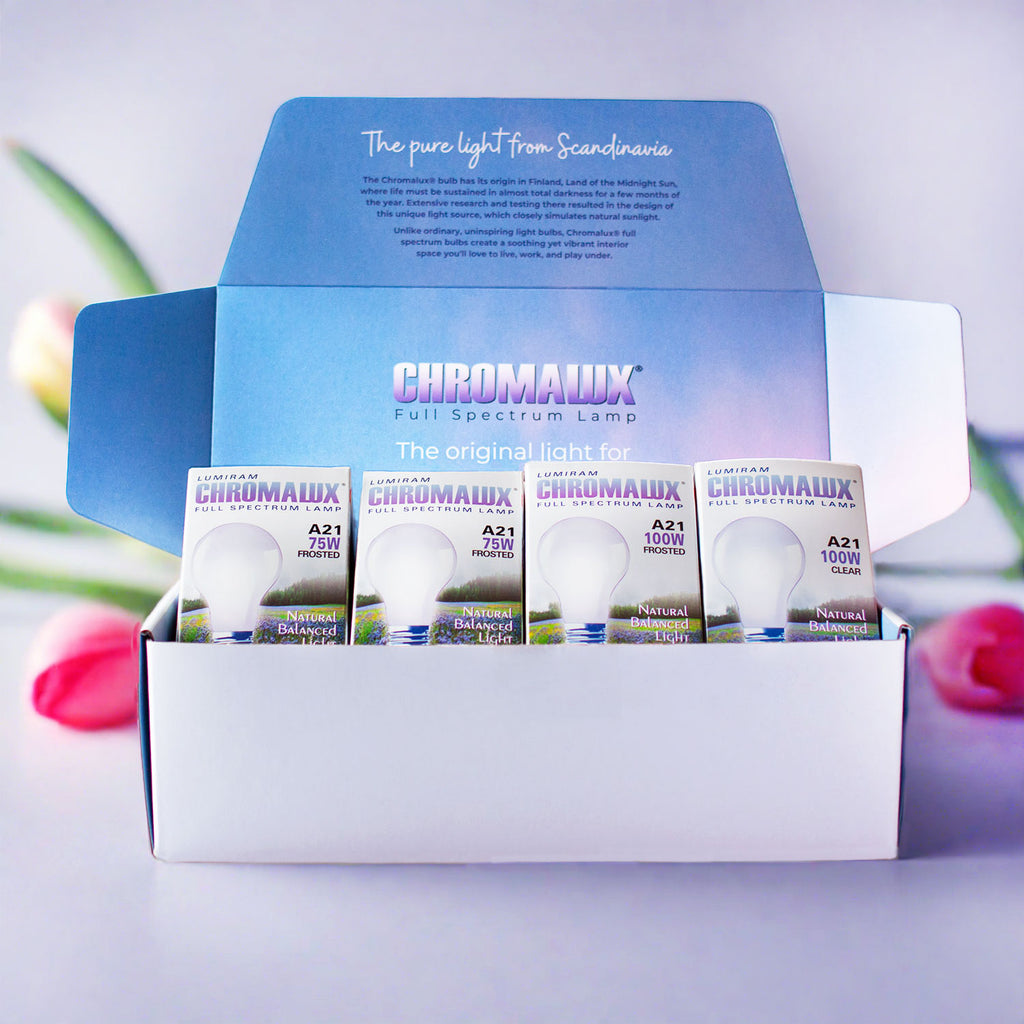
  While it may be common knowledge that a lack of natural light contributes to various health problems, the topic of health and light usually ends there. Plenty of information exists regarding natural light and the various disorders (like seasonal affective disorder) that arise from a lack of it, but what about discussing the type of indoor lighting we use? Wouldn't a lack of natural lighting indoors affect us too? Of course it does! That's why we do what we do. Indoor lighting - when done right - can in many ways improve your well-being (and, for some, your health).  But not all light is the same; here's precisely what to look out for if best health is in your interest.  What does light do for us in general? Stating the obvious, light allows us to see. But the extent of how well we see depends mainly on the type of light we use. Of course, natural light is always best, but what about when that's not available? How we see = How we feel Our ability to see our environment accurately correlates directly to our well-being. Think about it: how do you feel after spending time in a poorly-lit space? Probably not great. Indoor lighting profoundly affects us. That's why we love natural light pouring in through our windows; it evenly illuminates interiors with balanced, pure light that makes everything look better, and by extension, makes us feel better.  A note on blue light  In a modern era necessitating blue-light filtering glasses and the use of screen filters after sunset, we've grown used to the idea that blue light is dangerous. But here's the thing. Blue light is a fundamental and biologically necessary portion of the light spectrum, the specific type of light that innervates our circadian rhythm and the resulting cascade of biological processes that keeps our bodies running in good health.  So, while "artificial" blue light from screens and other electronics isn't the greatest idea (especially at night), blue light is present naturally in sunlight during the morning and daytime hours. It's a necessary ingredient in the recipe for good health. In other words: blue light is necessary, just not at night: it's stimulating and prevents our bodies from winding down for a night of deep and restorative rest.  What are the best light bulbs for health? Just like anything else concerning best health - think natural foods sans additives, preservatives, and other ingredients our biology doesn't understand or have use for - the best light bulb for your health is the analog type, the one that best mimics light from our natural source, the sun.  By definition, then, the absolute healthiest light bulb is incandescent (or halogen) Just as the sun radiates heat, producing the visible light spectrum we can see, an incandescent light bulb (and its brighter counterpart, the halogen incandescent) does much the same thing.  An electrical current heats the base of an incandescent light bulb, which produces heat and visible light when conducted through the filament housed inside. When we say incandescent bulbs are the closest thing to natural sunlight, we weren't kidding; the act of incandescence makes them one and very much the same - and our body recognizes its light as such.  Is a full spectrum daylight bulb necessary for good health? Apart from using full spectrum bulbs with a 5000-6500K color temperature in the morning and daytime to stimulate alertness, you don't necessarily need these types of bulbs throughout the day for optimal health. Also, be aware of the light technology: any light bulb in this higher, cooler color temperature range is most likely either LED or fluorescent.  So, while we absolutely suggest using a light therapy box or full spectrum daylight fluorescents during morning and daytime to increase energy and keep circadian rhythms in sync, please be sure to note the quality. Look for bulbs with a high CRI from a reputable manufacturer.  Additionally, apart from applications specifying the need for a true full spectrum bulb (such as growing plants or basking reptiles in UV), most of us would benefit as much from a pure light source with a balanced color spectrum. Recommendations On its own, an incandescent or halogen light bulb produces the purest, most natural form of artificial lighting. We suggest using incandescent or halogen bulbs throughout the day + night if you're after a greater sense of well-being. Also - unlike most harshly flickering LED or fluorescent bulbs - incandescents (and color-correct halogens like Chromalux®) will also be the healthiest type of light for your eyes!   Especially during shorter fall and winter days, Chromalux® full spectrum incandescent light bulbs will make a positive change in how you feel and show up every day. The analog glow of incandescence supports our bodies and our health (and has the added benefit of nourishing infrared), while the signature neodymium-compounded glass purifies light in an uplifting, yet soothing way - unlike any ordinary light bulb. Use them to support your mood, creativity, and overall well-being all year with no fear of blue light interrupting your sleep.  Light is an absolutely fundamental part of life, and a beautiful, inspiring gift of nature. We'd like to keep it as such! Choose better, natural light bulbs and start unwinding a bit! Wishing you all the best in light and health!    Experience the uniquely beautiful, natural light of Chromalux® full spectrum with this full spectrum incandescent best sellers bundle (includes 4 standard light bulbs) Some of our other favorite healthy light bulbs for the home or office? Chromalux® 60W incandescent bulb Chromalux® 75W incandescent bulb Chromalux® 40W B10 Candelabra bulb

the healthiest light for eyes

The Healthiest Light for Eyes

Eyes. Something we didn’t use to think about much when it came to our lighting choices. In recent years, we've noticed a notable shift as more individuals seek eye-friendly lighting options due to reported eye strain and discomfort caused by most generic light bulbs. Isn't light supposed to help you see better?  If you’re curious why that happens — and how light quality actually affects visual performance — we break it down here → Do Better Light Bulbs Improve Vision? We'll start the conversation with a shameless plug: did you know that the Chromalux® incandescent bulb has proven benefits for eyes and the low-vision population? When tested under Chromalux® vs. some other standard lamp, a statistically significant portion performed better on near-field acuity tests under the Chromalux® light. Many others just stated a preference for the Chromalux® light! So what's so special about the Chromalux® bulb? It comes down to something our founders pioneered over 45 years ago: the use of neodymium glass in light bulbs. The Chromalux® light bulb has its origin in Finland, where doctors used a similar neodymium glass light bulb to detect skin abnormalities in patients. Under this unique lamp, colors were more vivid and the contrast was greater, leading to an easier sense of minute differences in texture, tone, color, and overall appearance. It turns out that the same elements that work wonders in the home are also most beneficial for the eyes!  What is neodymium glass? You surely have noticed the lavender appearance of a Chromalux® bulb. What you see is the neodymium that is compounded into the glass, giving Chromalux® its signature tint:     Neodymium purifies dull portions of the visible light spectrum (such as yellow and green), creating a very pure and clarified light, unlike any other type of light bulb. Using an analogy photographers will love: using neodymium glass has the same effect on our surroundings as increasing contrast, increasing saturation, and de-hazing has on a photo. What does this mean for our eyes? With less competition in the visual field, our eyes can finally relax.  Here are some eye-friendly Chromalux® properties: ✓ Increases contrast between black and white, making black text pop out from a white page. ✓ 100% glare-free.  ✓ Shows colors vividly and true-to-life.  Another property that's unique in today's lighting landscape? Chromalux® bulb has stuck to its roots in incandescent technology, with the classic Chromalux® neodymium glass incandescent bulb still available. In fact, it's the only bulb we truly recommend for ultimate eye health.  Leading us to a more general consideration regarding your eyes and health:  What is the best light bulb for eye health and sensitive eyes? We've read many conflicting claims out there: one source will say LEDs are worst due to their elevated blue light content, while yet another claims it's the best due to the absence of ultraviolet light.  You are probably seeking a definitive answer. We prefer to use an "analog" light source such as an incandescent or halogen incandescent bulb. Why are incandescent light bulbs best for eyes? No UV: In most cases, we agree that the absence of UV rays is probably best for the eyes, eliminating fluorescent bulbs.  Low Flicker:  The flicker present in most fluorescent and LED bulbs can be bothersome for most, causing nausea, headaches, and the inability to focus your eyes. For those with light sensitivity, it's best to forgo fluorescent and LED: while possible to eliminate flicker to a degree in these sources, it may not be worth the associated cost and headache. Limited blue light: We get enough blue light from our daily usage of smartphones and computer screens, so it's probably best not to rely entirely on LED sources. While blue light itself isn't inherently bad (it's abundant in natural sunlight during the morning/daylight hours, and absolutely vital for health and wellbeing), the electronic and artificial nature of blue light from LEDs can be straining and cause dry eyes. Not to mention that most generic light bulbs these days emit a spike of blue light in isolation, unlike full spectrum of blue light you would receive from natural sunlight during the daytime, or from a proper full spectrum light bulb. There's also been studies claiming possible damage to the retina over long-term exposure of digital blue light from our device screens and standard, run of the mill LEDs.  That leaves us with incandescent technology, which provides the softest, most neutral light. When it comes to our health, at least some things are best left to natural, analog sources of light!  The verdict: Get plenty of natural light. Consider using more incandescent or halogen lights. Bright light isn't usually the best light: opt for any light that makes your eyes feel less strained.  Ways to protect your eyes in daily life: Minimize screen usage at night and in dark rooms. Hold your phone at the most comfortable distance away from your eyes. Wear sunglasses during the summer and at high noon when the sun is strongest. Follow the 20-20-20 rule: When working on screens (computer, tablet, smartphone), take a 20-second break to look at something 20 feet away, every 20 minutes. Use blue light-filtering computer glasses or screen filters when working on your computer. Use incandescent lighting in close proximity (when working or reading). What's the best indicator of long-term eye health?   Something that the tips above have in common: reducing eye strain. Use Chromalux® or another full spectrum, neodymium glass bulb that increases contrast and clarity, that lends itself overall to a zero eye strain, better visual experience. Your eyes will thank you.  What about LED: Are LED bulbs bad for your eyes? In short, we don't recommend LED bulbs for your eyes if you're looking for better overall eye health and/or reduced eye strain - and especially not the standard run-of-the-mill LED! LED is a truncated visible light source, and normal, non-full-spectrum types often have unnatural spikes in blue light wavelengths. Blue light is the shortest, highest frequency color of the visible light spectrum, and though absolutely necessary during the morning and daytime to get energized and keep our circadian rhythm synced, artificial, nonfull spectrum types can have potentially damaging long-term effects on our eyes.  What color LED light is best for your eyes?  Is warm white or cool white better for eyes?  Again, though we generally don't recommend LED bulbs for those with optimal eye health in mind, sometimes that's all one can use! In that case, remember that the main issue with LED and our eyes is the blue color wavelength spike in the visible light spectrum of LED bulbs. Therefore, the best color temperature LED for your eyes is anything in the warm white color temperature range (2700-3000K). Since clarity and contrast is a big part of lessening eye strain, a color-corrected type like our warm white Chromalux® LED might also be a great option!  What is the best light for eyes? If you want the absolute best light for your eyes, choose any bulb from the Chromalux® incandescent collection, so you can finally see what you've been missing.  Wishing you all the best in light and health!    💡Thanks for reading   If you're interested in more articles like this (and for even more content on light and wellness), subscribe to our newsletter! You'll also get a code for 10% off your first order with us - so you can try out all the above recommendations!  At the very least, consider sharing If you found this helpful, odds are someone you know might too! Share this article with friends that may find the above helpful on their wellness journey. 

×